China's Online Arrival Card: How to File It, Step by Step
Since 20 November 2025, foreigners can file China's arrival card online before they fly. It is free, and the paper card is still there as a backup.
✓ Checked and fact-checked

China’s National Immigration Administration (NIA) started online arrival card filing for foreigners on 20 November 2025. You enter your details before you travel, instead of filling in a paper card in the immigration hall. The NIA’s own report to the International Civil Aviation Organization (ICAO) says the online system is the main channel, kiosks at the port are the second option, and paper cards are the backup.
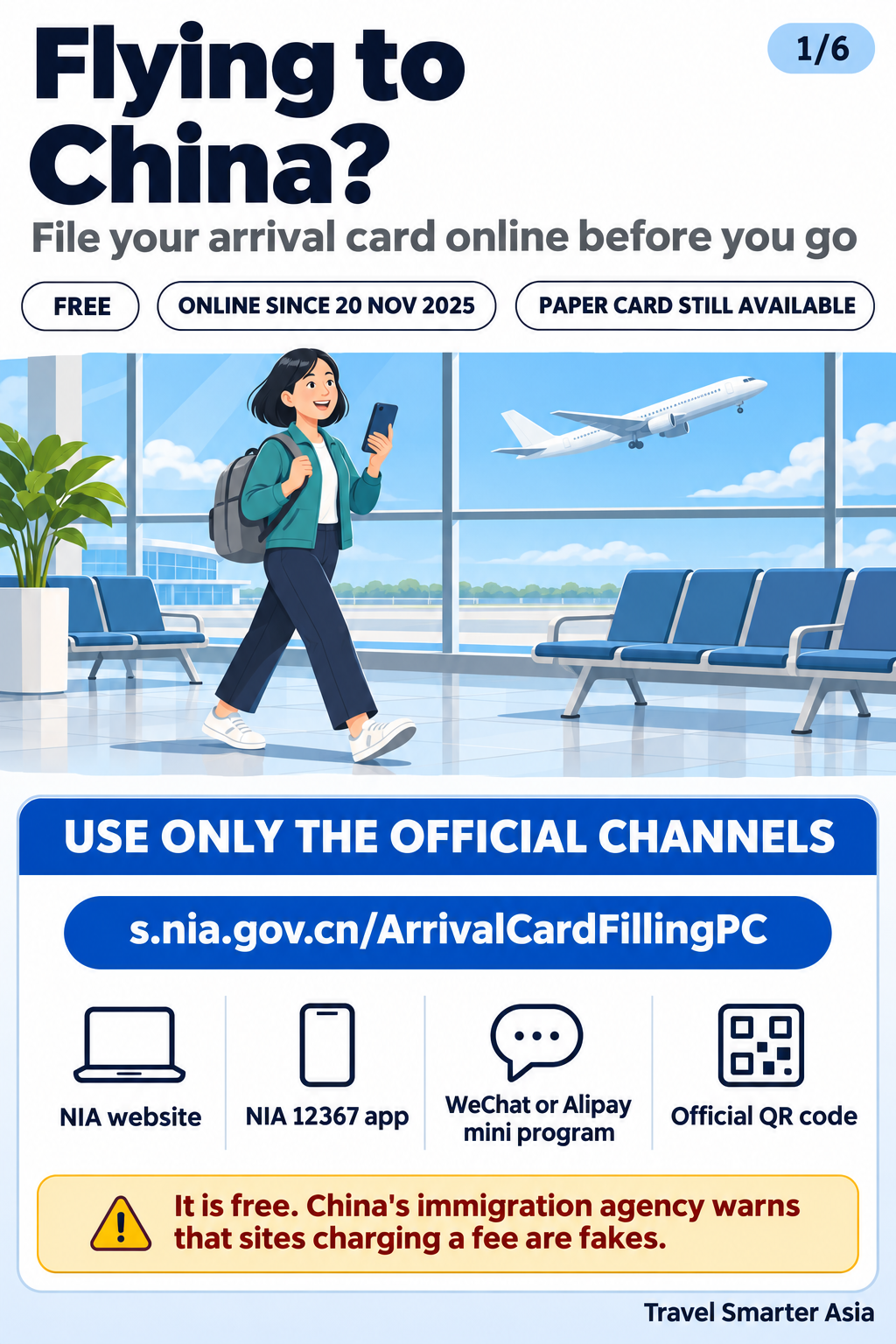
It is free, and fake sites charge
The NIA says online filing “is free of charge”. In December 2025 it warned that overseas fraudsters had set up websites posing as the official platform and were taking fees from travellers.
Use only these channels, which the NIA names:
- The NIA website: s.nia.gov.cn/ArrivalCardFillingPC
- The NIA government service platform
- The “NIA 12367” app (移民局12367)
- The NIA 12367 mini programs in WeChat and Alipay
- The official arrival card QR code, scanned with your phone
If a page asks you to pay, close it.
Who does not need to file
The form’s own instructions list eight groups who are exempt:
- Holders of a valid Foreign Permanent Resident ID Card of the People’s Republic of China.
- Holders of a valid Mainland Travel Permit for Hong Kong and Macao Residents (non-Chinese).
- Travellers in direct transit within 24 hours who do not leave the port’s restricted area.
- Members of foreign tourist groups who are visa-free or hold a group visa.
- Foreign crew members, drivers and other staff of transport vehicles.
- Cruise passengers who arrive and leave on the same ship.
- People eligible for centralised submission of entry and exit documents.
- Travellers who enter through the E-channel.
Every other foreigner entering China needs an arrival card, online or on paper. That includes people using the 240-hour visa-free transit: the form says transit passengers who must leave within 24 or 240 hours can file through it.
What to have ready
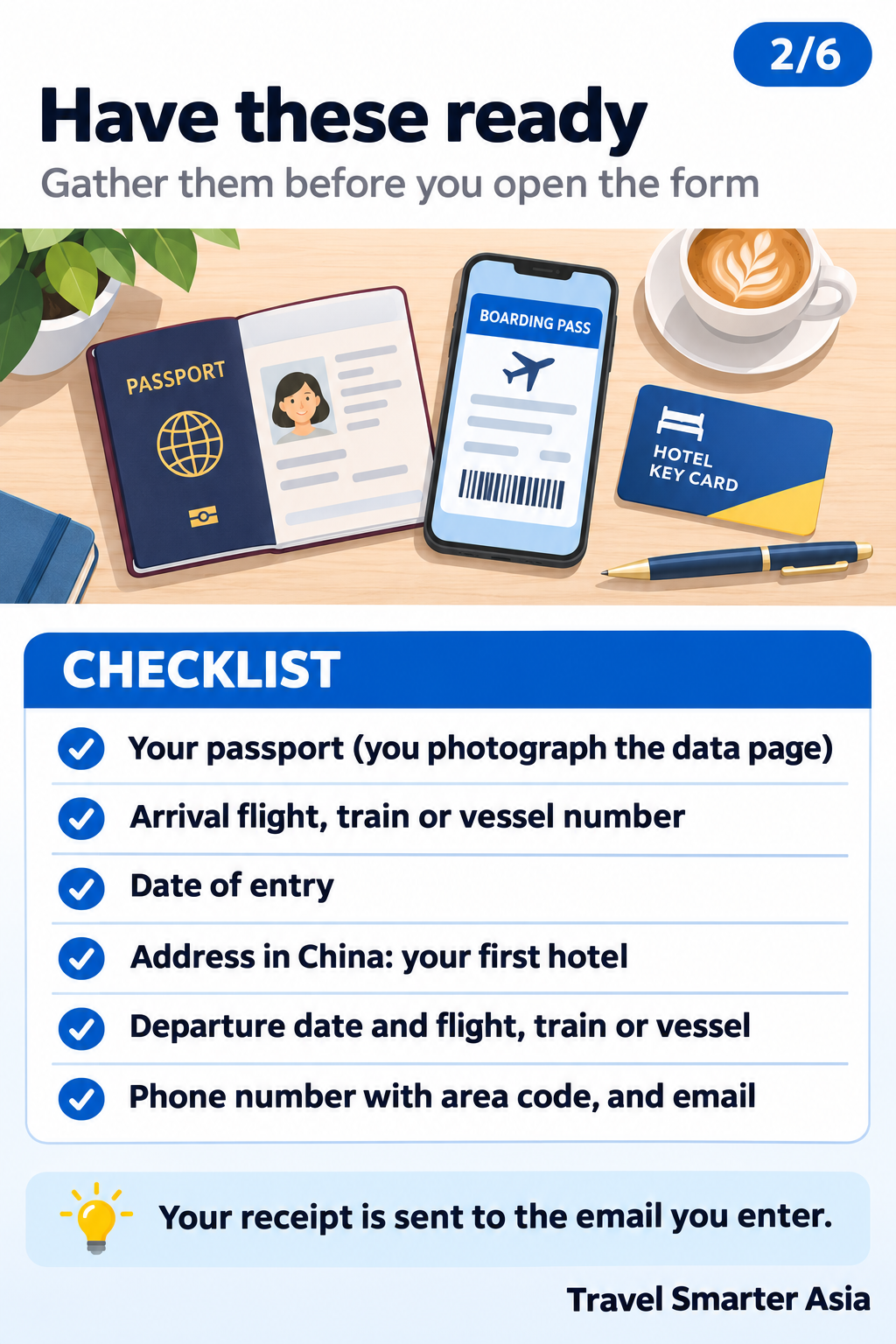
The form asks for your passport, your arrival flight, train or vessel number, your date of entry, your address in China, your departure plans, a phone number with its area code and an email address. The NIA’s ICAO report says the system works in 13 languages, English, French and Korean among them.
Passport details
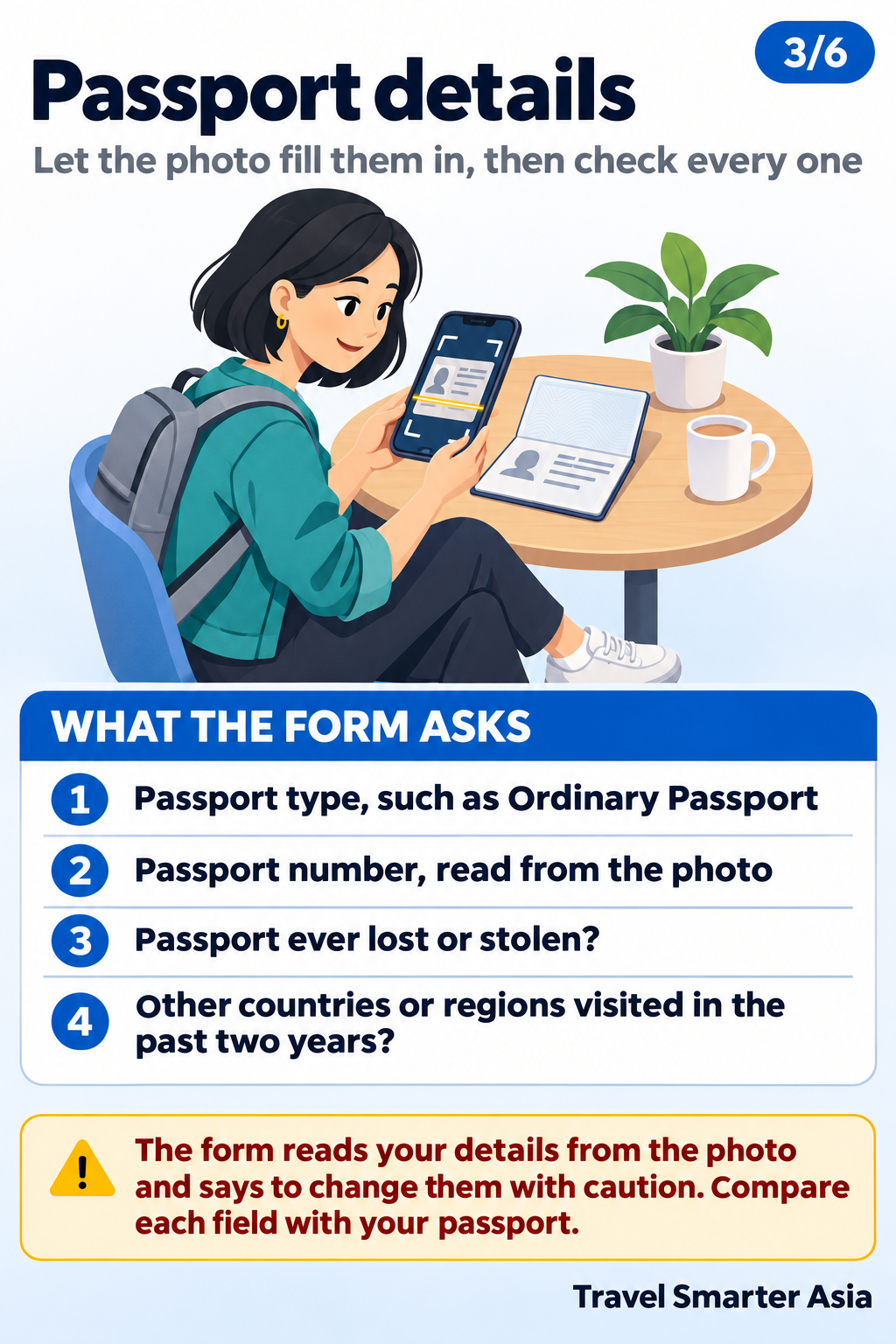
The form tells you to photograph the data page of your passport, and it fills in the passport fields from the photo. It says these fields should be changed “with caution”, so compare each one with the passport itself. It also asks whether the passport has ever been lost or stolen, and whether you have been to other countries or regions in the past two years.
Visa, visa-free entry or transit

The form asks whether you hold a valid visa or other entry permit. With a visa, you enter its number and type. Without one, you choose the visa-free policy you are entering under. Visa-free entry for up to 30 days and the 240-hour transit are separate policies with separate rules. There is also a field for the Chinese cities a transit traveller passes through.
The form checks your answer. If your passport does not fit the policy you picked, it shows “You don’t qualify for visa-free entry” and asks you to correct the information.
Trip details

The purpose of entry list includes “Sightseeing/Leisure”, “Conference/Business” and “Visiting Friends/Relatives”. You then give your date of entry and your address in China, plus an inviter’s name and contact details if someone in China invited you. The form asks whether you have a confirmed departure itinerary, and if you do, for the date, the city, the port and the flight, train or vessel number.
Your first hotel is the simplest address to give. The hotel also registers your stay with the local police, which is covered in who files a foreign guest’s registration.
Companions, the declaration and the receipt
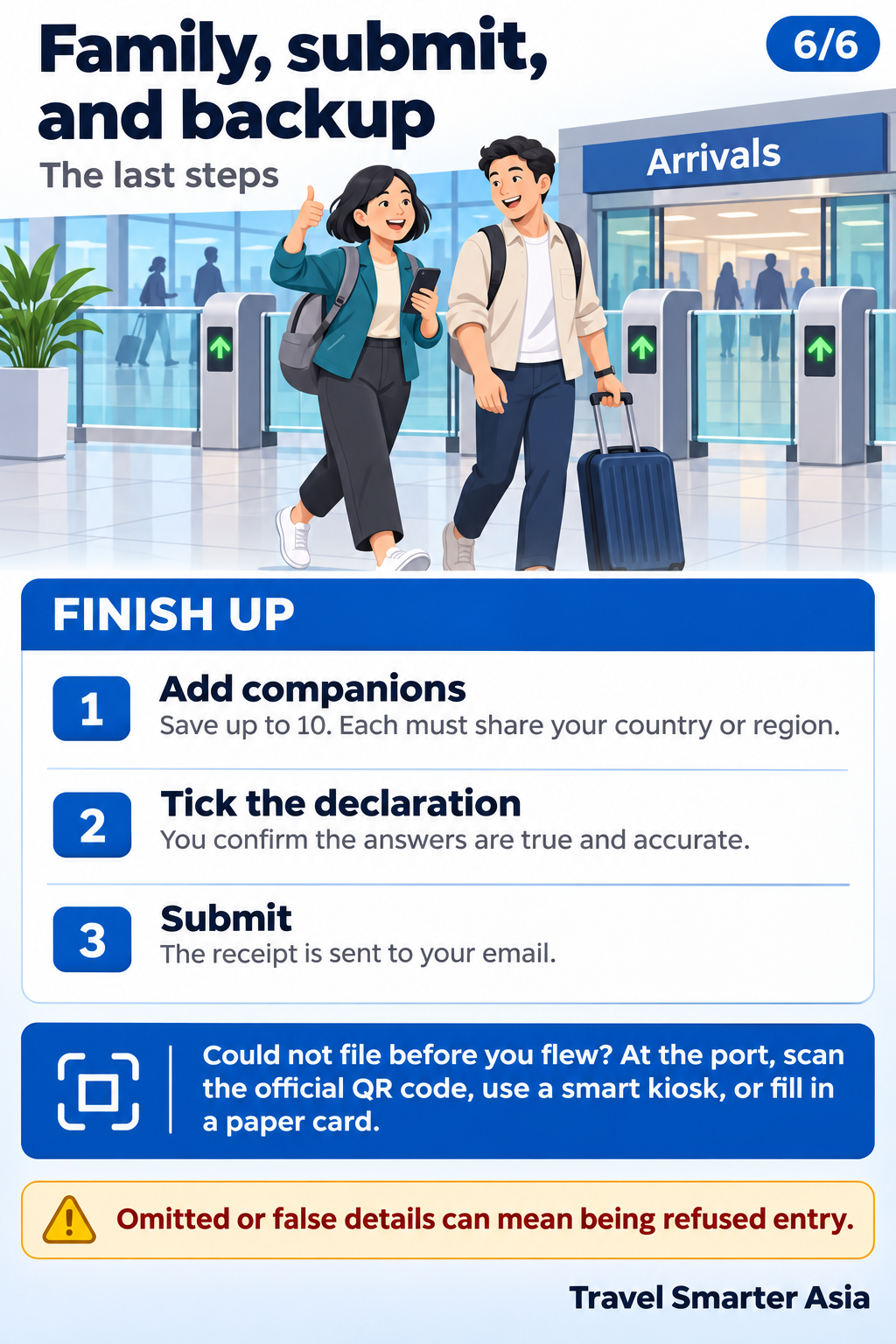
You can add the people travelling with you to your declaration and save up to 10 of them as frequent companions. The form rejects a companion whose country or region does not match yours, so a companion with a different nationality files a separate card.
Before you submit, you tick a declaration that the information is “true and accurate”, and that the immigration authority may store and use it. The form warns that omitting or concealing information can lead to refusal of entry or transit. After you submit, the Entry Declaration Receipt is sent to your email.
The official sources we read do not say how many days before arrival you can file, or how to change a submission.
If you could not file before you flew
You can still do it when you land. The NIA says that at the port you can scan the on-site QR code with your phone, use a smart device in the immigration hall, or fill in a paper arrival card.
After immigration
Customs comes next. China’s customs rules on arrival cover what to declare and which channel to use.