India Customs Allowance: ₹25,000 for Foreign Tourists, 2 Litres of Alcohol, 100 Cigarettes
A foreign tourist flying into India can bring ₹25,000 of new goods duty-free, plus 2 litres of alcohol and 100 cigarettes. By land, the allowance is nil.
✓ Checked and fact-checked
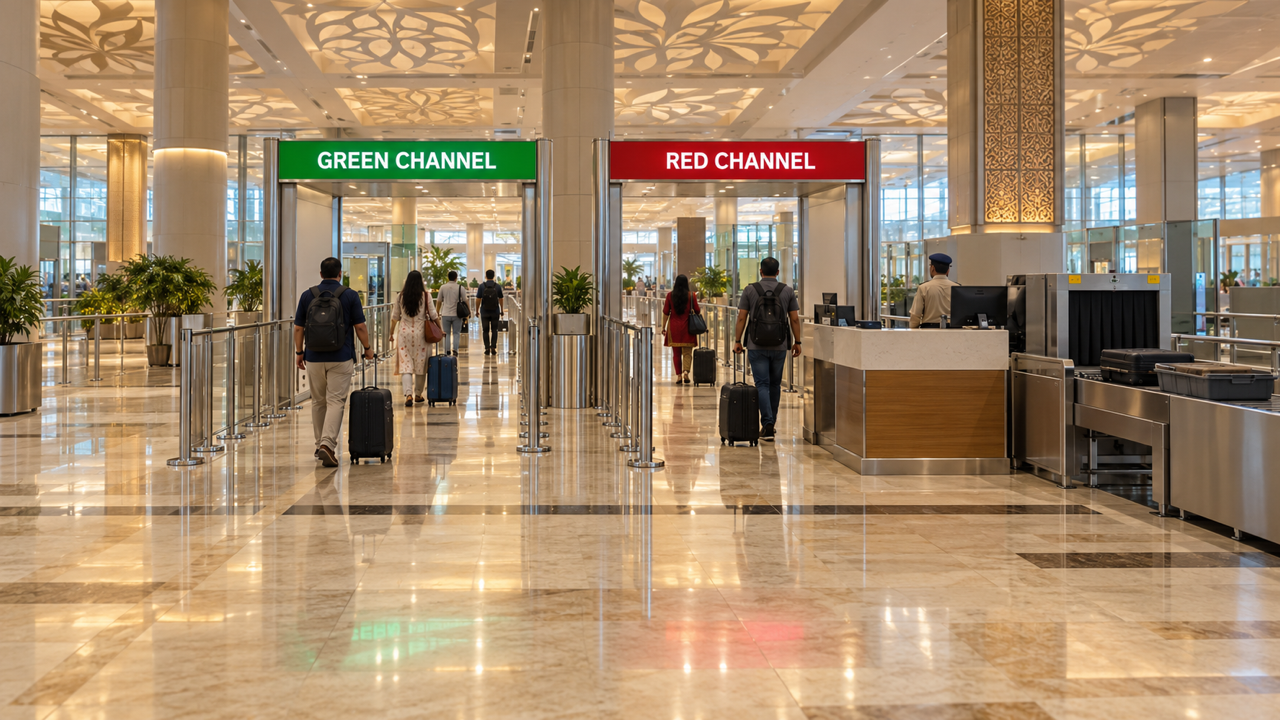
A foreign tourist arriving in India by air can bring in ₹25,000 of new goods without paying duty. Passengers arriving by land have no general allowance at all, only used personal effects. The figures come from the Baggage Rules, 2026, which CBIC notified as 14/2026-Customs (N.T.) on 1 February 2026 and which took effect on 2 February 2026, replacing the Baggage Rules, 2016. Checked 25 October 2026 against the rules, the Customs Baggage (Declaration and Processing) Regulations, 2026 and CBIC’s Guide for International Travellers. The guide says it “does not carry any legal authority” and that only the Gazette notifications bind, so the rules come first here.
What each passenger can bring duty-free
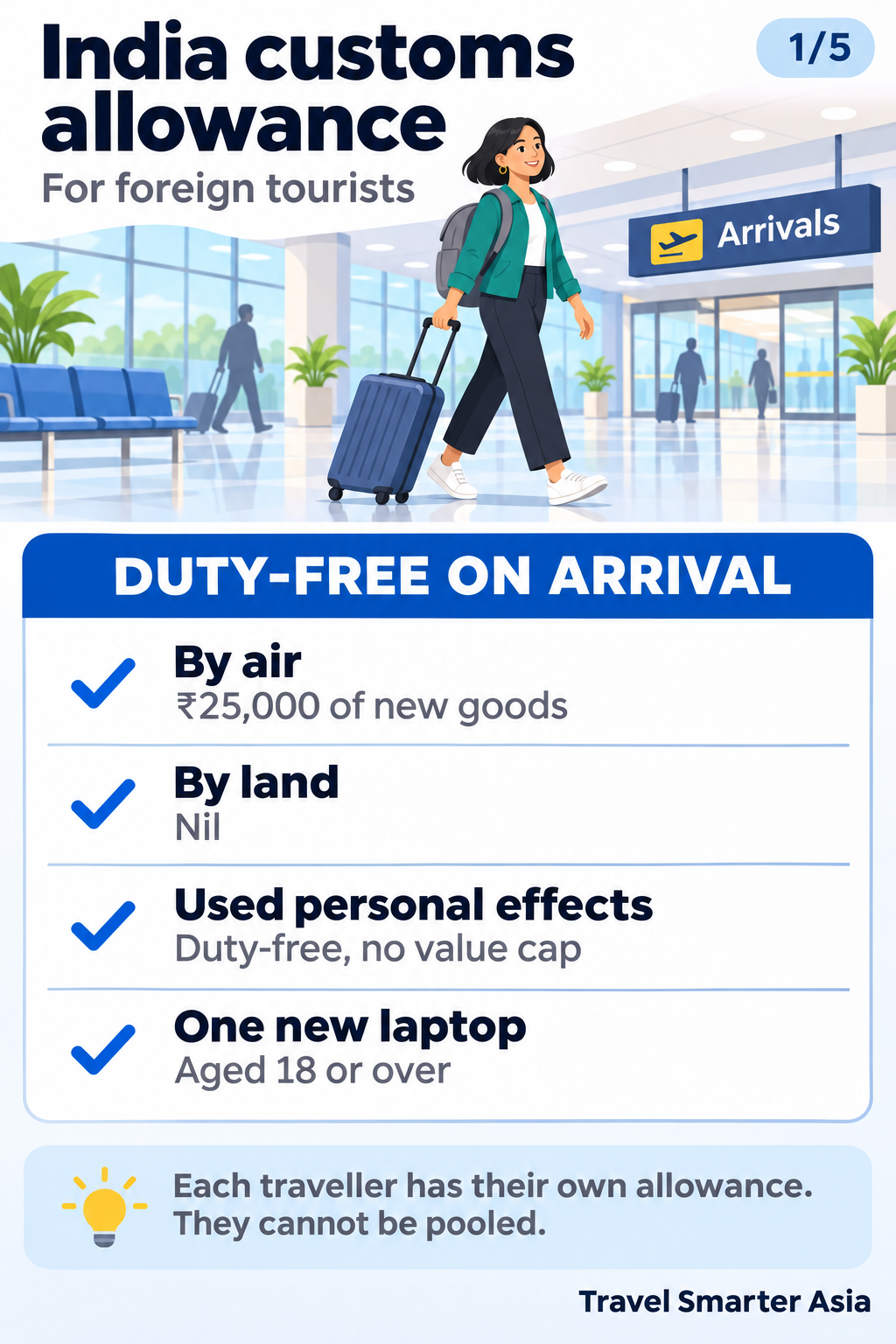
Used personal effects and travel souvenirs are duty-free for everyone, infants included, with no value cap. New goods count against the allowance:
| Passenger | Allowance for new goods | Arriving by |
|---|---|---|
| Tourist of foreign origin, not an infant | ₹25,000 | Any mode except land |
| Resident, tourist of Indian origin (NRI or OCI cardholder), or foreigner on a non-tourist visa staying over six months | ₹75,000 | Any mode except land |
| Any passenger | Nil | Land |
The rules define a tourist as someone not ordinarily resident in India who stays no more than six months in any twelve for a legitimate non-immigrant purpose. An infant is a child of two or under, and gets no general allowance. The rules bar pooling: one passenger’s allowance cannot be combined with another’s. A family of four foreign tourists has four separate ₹25,000 limits.
Anyone aged 18 or over, other than crew, may also bring one new laptop, including a notepad, duty-free.
Alcohol and tobacco
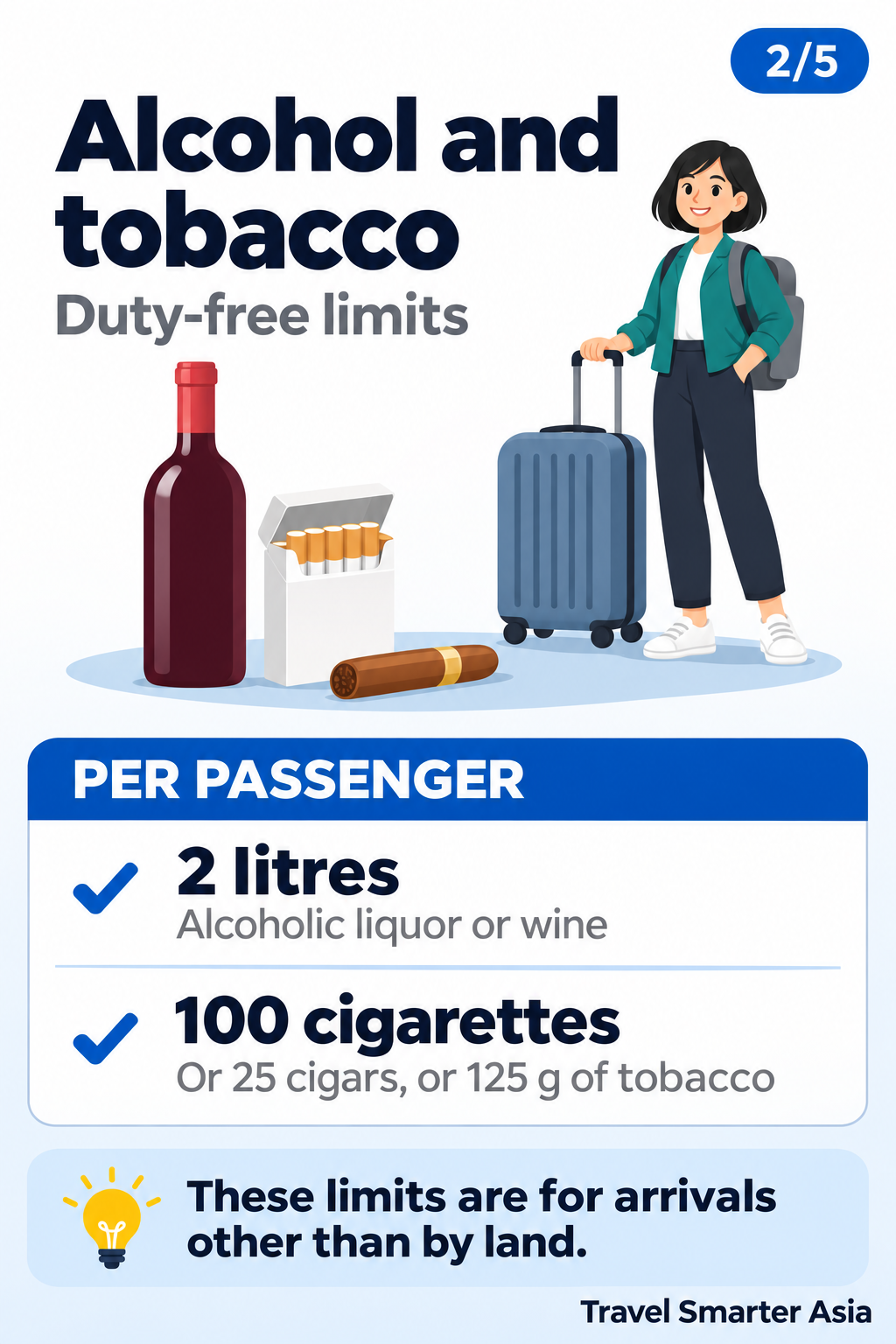
The declaration form lists the limits for all passengers arriving other than by land:
| Item | Duty-free limit |
|---|---|
| Alcoholic liquor or wine | 2 litres |
| Cigarettes | 100 sticks |
| Cigars | 25 |
| Tobacco | 125 g |
The form joins the three tobacco lines with “or”. Annexure I to the rules lists amounts above these limits as outside the free allowance.
Duty on goods above the allowance
Customs duty is charged on the value that exceeds your allowance. Neither the rules, the guide nor the form states a rate. The Union Budget 2025-26 annexure lists dutiable articles in baggage (tariff heading 9803) at an effective 35% from 2 February 2025, down from 35% plus a 3.5% surcharge, with the tariff rate cut from 100% to 70% (Budget speech annexure). The 2026-27 budget’s customs annexure carries no line on heading 9803. That makes 35% the latest published figure. Whether other taxes apply on top is not stated.
Goods in commercial quantities cannot clear as bona fide baggage, “even on payment of duty”, the guide says.
Jewellery and valuables
Used jewellery that a passenger needs for daily life is duty-free as a used personal effect. The special weight allowance, 40 g for women and 20 g for others, is only for residents and tourists of Indian origin who have lived abroad for more than a year. Other jewellery is dutiable.
A tourist bringing valuables for use during the stay, such as jewellery or a camera, can declare them on arrival and ask for a Temporary Baggage Import Certificate. It lasts until first departure or six months, whichever is sooner, and you show it with the items when you leave. Gold or silver in any form other than ornaments falls outside the free allowance. The guide’s gold and silver concession (up to 1 kg and 10 kg) is for passengers of Indian origin or holding an Indian passport who have been abroad at least six months.
Cash and foreign currency
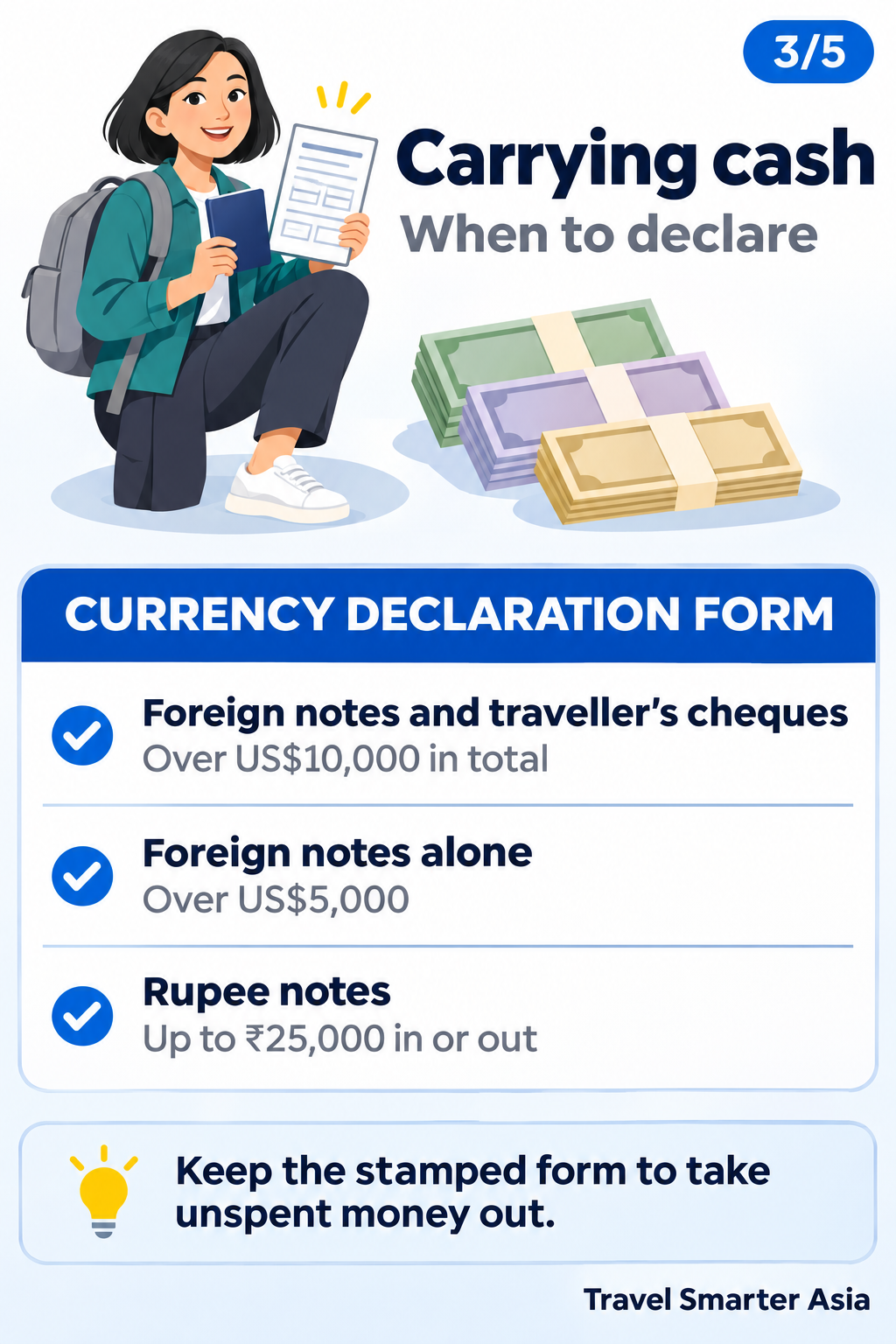
Under RBI’s Foreign Exchange Management (Export and Import of Currency) Regulations, 2015, amended to 24 February 2026, foreign exchange can come in without limit. You must complete a Currency Declaration Form for customs if either of these is exceeded:
- notes, bank notes and traveller’s cheques together worth more than US$10,000 or the equivalent
- foreign currency notes alone worth more than US$5,000 or the equivalent
Keep the stamped form if you will not spend everything. A visitor may take out unspent foreign exchange up to the amount declared on arrival.
Visitors other than citizens of Pakistan or Bangladesh may bring in or take out up to ₹25,000 in rupee notes. The declaration form asks about rupees above that.
Prohibited and declarable items
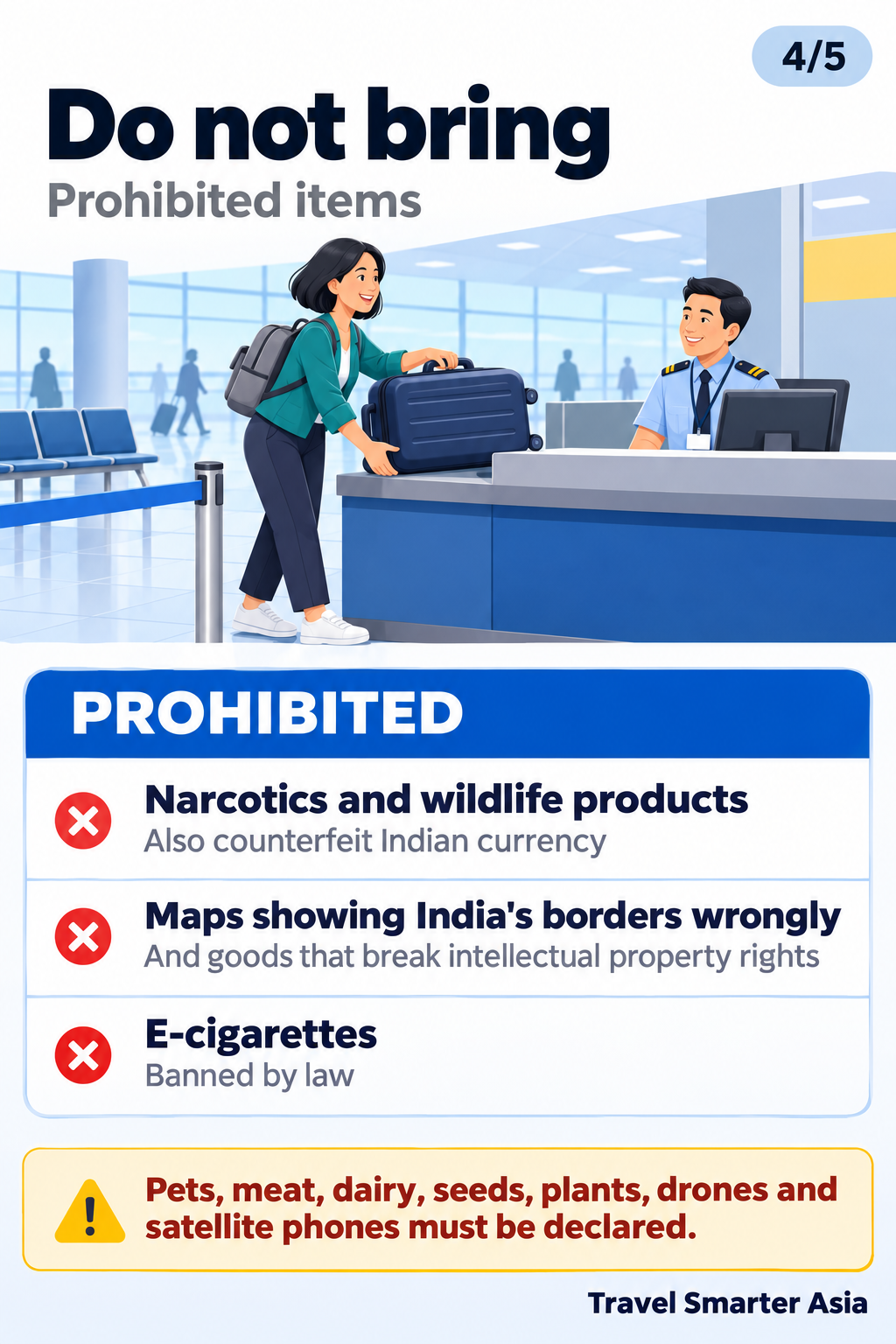
The declaration form names these as prohibited: maps and literature that show India’s external boundaries incorrectly, narcotics and psychotropic substances, goods that violate intellectual property rights, wildlife products, counterfeit Indian currency, and specified live birds and animals.
It also asks yes or no about pets, television, gold bullion, meat, dairy, fish or poultry products, seeds, plants, fruit and flowers, satellite phones and drones. A yes to any means the Red Channel. Pets need a no-objection certificate from the Animal Quarantine and Certification Services, or a DGFT import authorisation, declared in advance.
E-cigarettes are banned by the Prohibition of Electronic Cigarettes Act, 2019, which covers import. The Ministry of Home Affairs restated this in a Parliament reply of 17 December 2025.
Red channel, green channel and the declaration
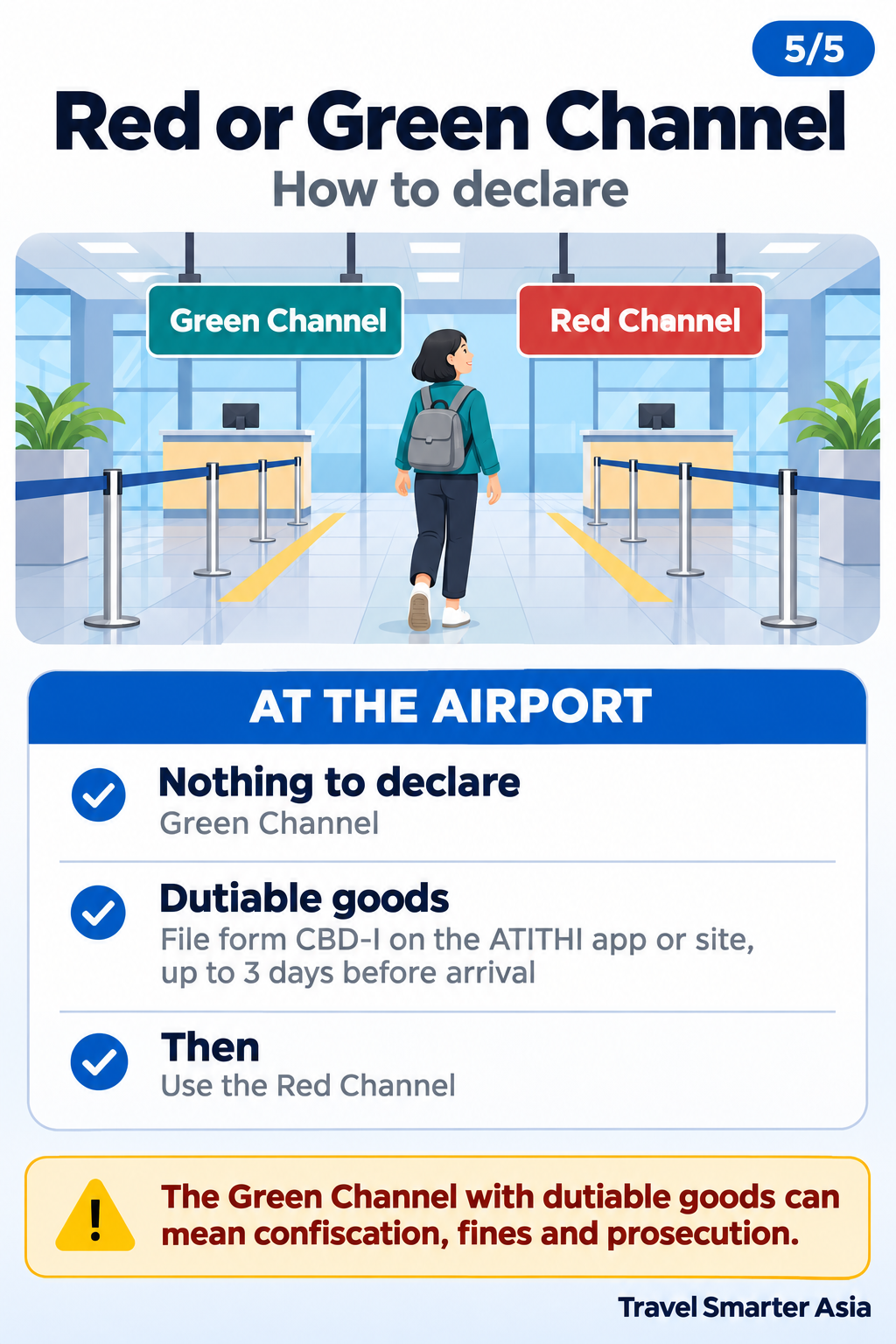
Use the Green Channel if you carry nothing dutiable or prohibited and answer no to every line on the form. Otherwise use the Red Channel.
- File form CBD-I electronically, with supporting documents, before you enter the Green Channel. The ATITHI mobile app or web portal, or icegate.gov.in, accepts it up to three days before arrival.
- You can update the declaration until your arrival time.
- If you could not file online, the officer may accept the declaration another way on arrival.
- Under-18s are declared by a family member or guardian, or by themselves if travelling alone.
The guide says walking through the Green Channel with dutiable, restricted or prohibited goods can lead to confiscation, fines, penalties and prosecution. A Customs Help Desk sits in the arrival hall.
What to confirm with Indian Customs before you fly
- No rate for excess alcohol or tobacco, no minimum age for either, and whether they count against the rupee allowance.
- How an item’s value is set, or how a single item above ₹25,000 is charged.
- Any penalty amount for a false declaration.
- Whether satellite phones and drones may be imported, only that they are declared. Medicines are not covered.
- CBIC still hosts older documents with ₹50,000 and the 2016 rules. Ignore them.
Visa and e-Arrival card steps are in India’s arrival rules beyond the visa and the India e-Visa guide.