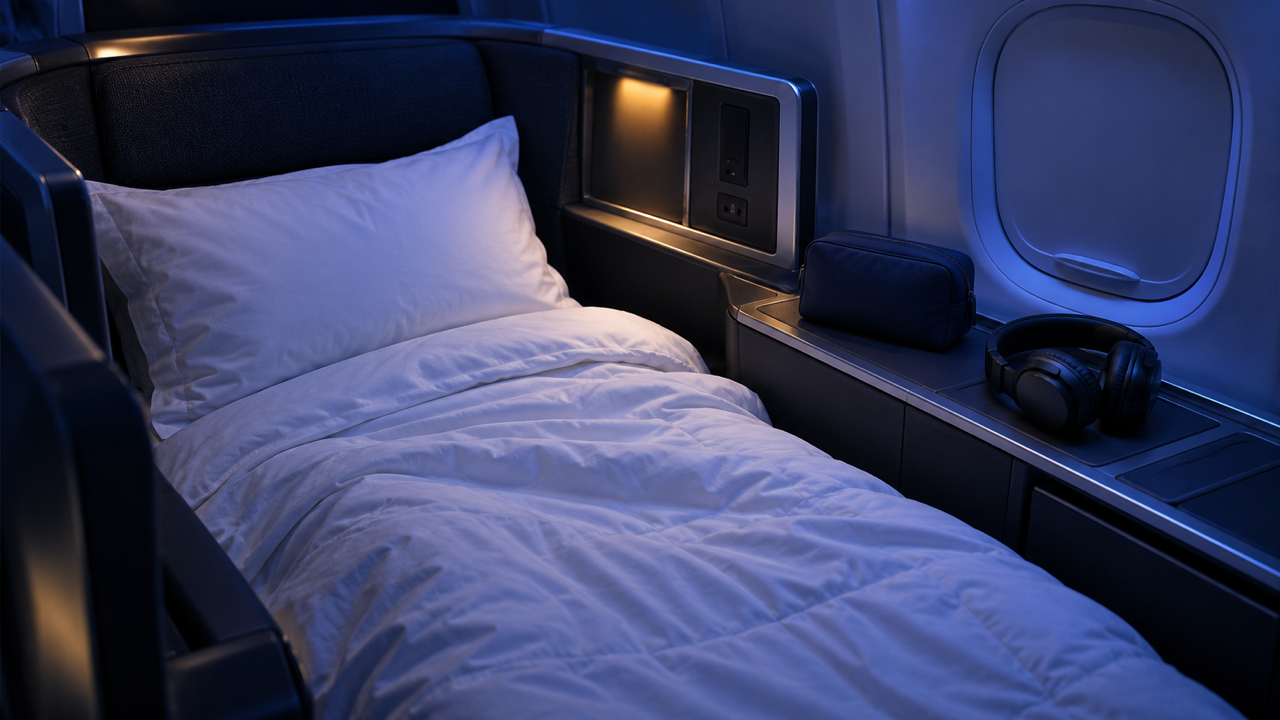
Most upgrade folklore is decades out of date. Premium seats are now allocated by automated systems, and the human discretion the stories rely on has largely gone.
Asking nicely at the counter
Dressing well and asking politely at check-in does not get you upgraded. Revenue-management systems allocate the seats, and the agent in front of you usually cannot override them and has no incentive to try.
Politeness helps when something has gone wrong and a human does have discretion: rebooking after a cancellation, a seat swap, a waived fee.
A counter will sell you an upgrade. Air India’s Upfront Upgrades are bought at the airport “against a fixed payment”, from four hours before departure until check-in closes, first come, first served and subject to seats. Malaysia Airlines sells a Last Minute Upgrade at its ticket and check-in counters, and says you can buy one “up to 3 hours before departure”. Air India’s airport upgrade terms also say points are “awarded as per the original class of travel”. Neither airline publishes the price.
Paid upgrade at booking
Buy the better cabin. A discounted premium fare is often cheaper than an economy fare plus the money and points you would spend improving it. People routinely spend forty thousand miles to reach a seat that cost a few hundred more to buy outright, so price the cabin you want first.
On Malaysia Airlines, an MHupgrade offer is a price “IN ADDITION to the fare paid for the ticket”. The Business fare for the same flight on Malaysia Airlines’ booking page is therefore the number your economy fare plus the bid has to come in under. Any fare search shows that figure too. Look before you bid.
Mileage upgrades
Miles are the classic way to move up a cabin, and two conditions catch almost everyone.
- Fare class. The ticket usually has to be in an eligible fare class as well as the right cabin, and the cheapest economy fares are commonly excluded entirely. You may need a more expensive economy ticket first. Add that difference to the miles and the total often exceeds a discounted business fare, so do the arithmetic before treating the miles as free.
- Upgrade space. The airline releases a set number of seats for upgrades. A visibly empty business cabin can have none released. The agent is not being difficult; there is nothing to give.
Bid systems
Many carriers run an auction. After booking, you name a price to move up, and shortly before departure the airline decides. It is often the best-value route into a premium cabin, because the airline is selling a seat it has otherwise failed to sell.
- A successful bid frequently buys the cabin without the full benefits. Miles and status credit may still be calculated on your original fare.
- Bidding low on a full flight loses. Bids work best on routes and days that are not busy, which is when fewest people want to upgrade.
Two Asian carriers put the first point in writing. Malaysia Airlines’ MHupgrade terms say the original ticket’s fare conditions, including the “accrual of frequent flyer points, shall remain unchanged”, and the upgrade amount earns Enrich Points on its own, at 1 per RM5. Air India’s Upgrade+ shows a price after booking instead of taking a bid, and keeps Maharaja Points “based on your original booking”.
Both also decide eligibility when you buy the ticket. MHupgrade excludes award tickets, MHflypass tickets, flights on MASwings and on Firefly, its sister airline, and any “Booking includes another carrier, whether interline or codeshare”. Air India’s FAQ says you may not be eligible if “You are booked on other airlines, or the ticket is not issued on an Air India document”, or if Air India does not operate the flight. A cheaper routing that adds one partner sector can take the upgrade off the table.
If you plan to bid on Malaysia Airlines, buy the Malaysia Airlines-operated flights as a booking of their own. On Air India, read the Upgrade+ eligibility list before adding another airline to the same reservation. Neither airline’s list excludes a ticket bought from a travel agent. They test the ticket stock, the operating airline and what else is in the booking.
Status-based upgrades
Elite tiers on some programmes include complimentary upgrades when space exists, allocated by tier and then by fare or booking time. They cost nothing and are the least predictable. Building a trip around one is how people end up disappointed in a middle seat.
The order to try them in
- Price the premium cabin. If it is close, buy it.
- Otherwise look at the bid system, usually the cheapest realistic path.
- Use miles only after checking your fare class is eligible and adding the fare difference.
- Treat a status upgrade as a bonus.
We have affiliate arrangements with Malaysia Airlines and Air India and earn a small commission on bookings made through our links.
Malaysia Airlines' own booking page, for the fare an upgrade bid has to beat (affiliate link)
Air India's Upgrade+ and airport upgrade terms (affiliate link)