Arriving in Osaka: Haruka, Nankai and Tapping a Bank Card on the Metro
How to get from Kansai Airport into Osaka by JR Haruka, the Nankai trains or the airport limousine bus, the Haruka price rise of 1 November 2026, tapping a bank card on Osaka Metro, ICOCA and the Osaka Amazing Pass.
Some links here are affiliate links. If you buy through one we may earn a commission, at no extra cost to you. It never changes what we recommend, and the pages that carry no links say so on our about page.
✓ Checked and fact-checked
Kansai International Airport (KIX) sits on an island in Osaka Bay, and three operators run into the city: JR West, Nankai and the airport limousine buses. Before you fly, register your immigration and customs details for the single 2D code. If you are heading for the theme park, USJ tickets are covered in their own guide. Staying in Kobe? The Bay Shuttle ferry from Kansai Airport to Kobe takes about 31 minutes.
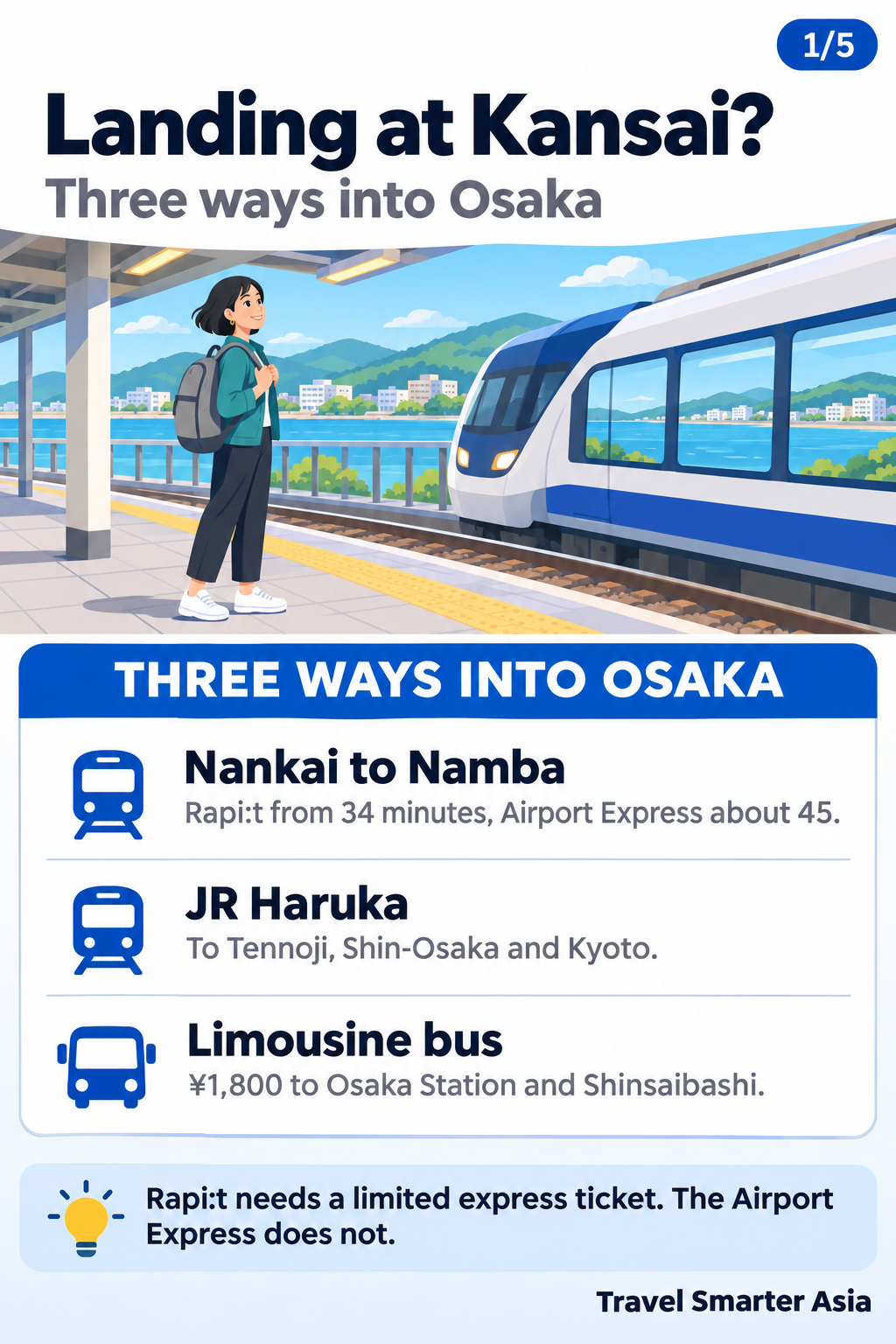
Nankai: the quickest way to Namba
Nankai says its Limited Express Rapi:t connects “Kansai Airport and Namba in as little as 34 mins”, and that an “Additional limited express ticket is required for Limited Express Rapi:t.” Its Airport Express takes “about 45 mins” to Namba, and “Only normal train ticket is required.” Nankai’s English page does not give the fares.
JR Haruka, and its new prices
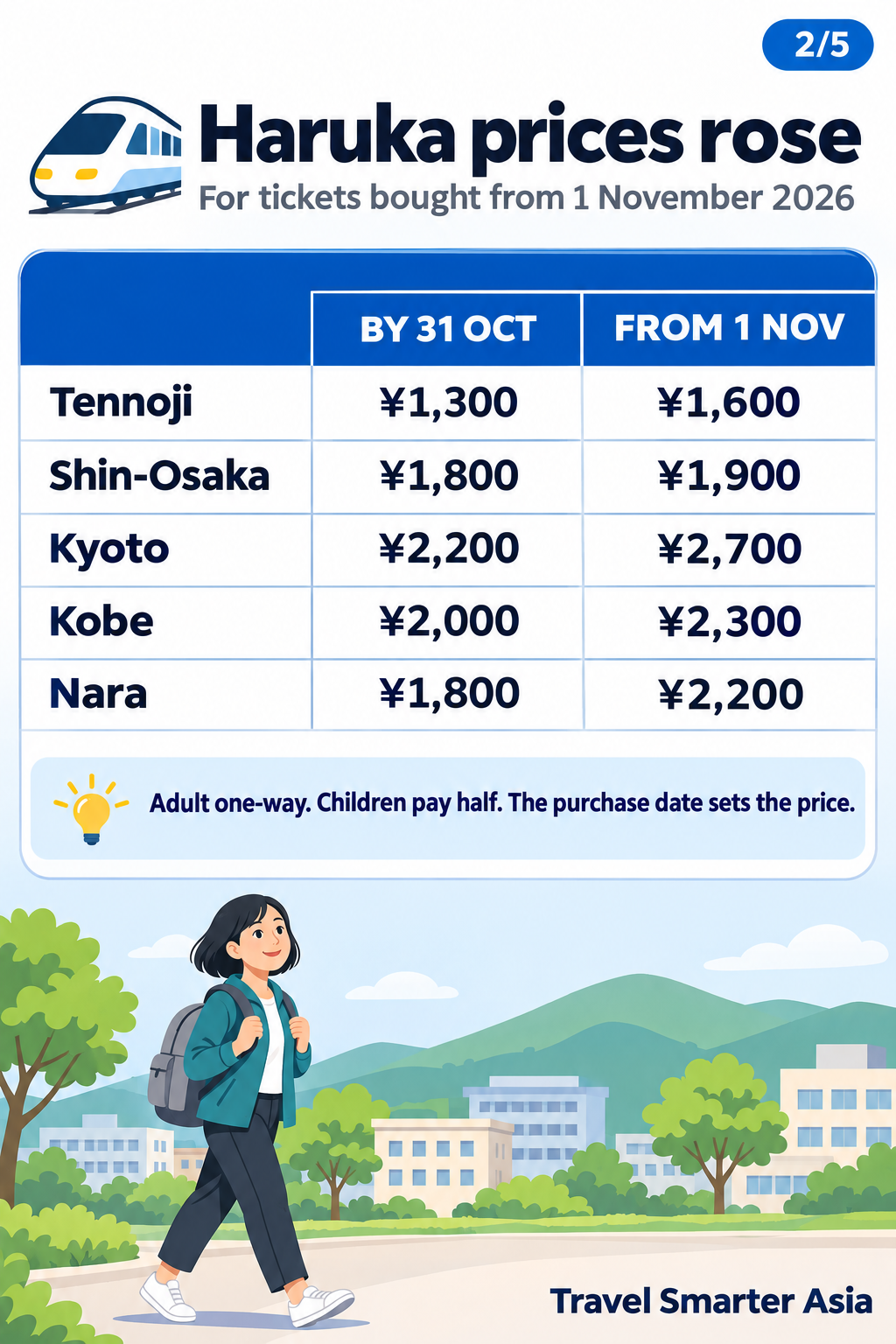
JR West announced on 30 October 2026 that Haruka one-way ticket prices “will increase for purchases made on or after November 1, 2026.” The price depends on the date you buy. Adult one-way prices from Kansai Airport:
| To | Bought by 31 October 2026 | Bought from 1 November 2026 |
|---|---|---|
| Tennoji | ¥1,300 | ¥1,600 |
| Osaka or Shin-Osaka | ¥1,800 | ¥1,900 |
| Kyoto city zone | ¥2,200 | ¥2,700 |
| Kobe | ¥2,000 | ¥2,300 |
| Nara | ¥1,800 | ¥2,200 |
A child’s ticket is half the adult price, and the same prices apply in the other direction.
The airport limousine bus
Kansai Airport Transportation Enterprises lists one-way adult fares of ¥1,800 to Osaka Station (Umeda), to Kintetsu Uehommachi and Shinsaibashi, and to Nanko, Tempozan and USJ, and ¥2,800 to Kyoto. Its page marks the Abeno Harukas (Tennoji) service as cancelled.
Tapping a bank card on Osaka Metro
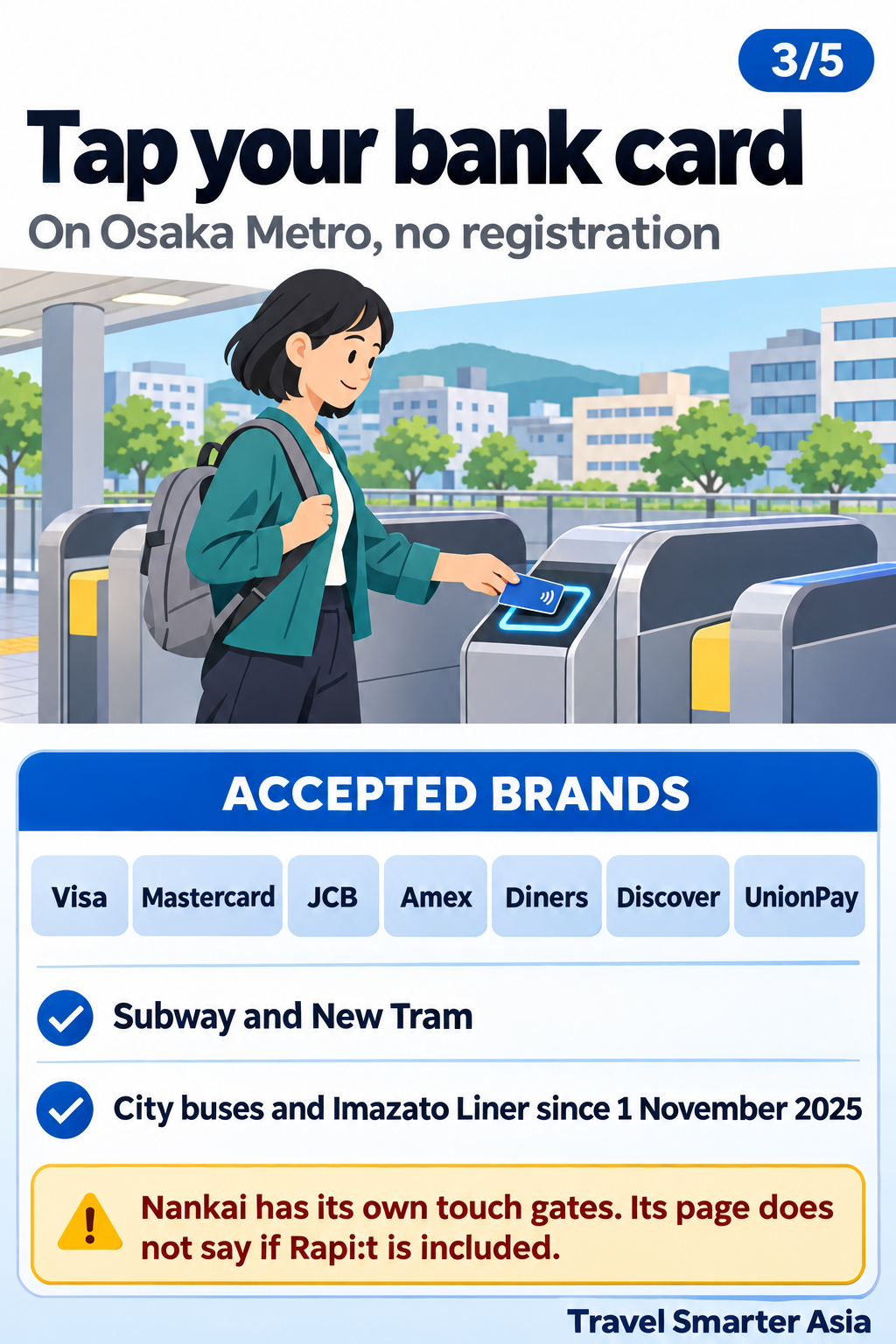
Osaka Metro accepts “Visa, Mastercard, JCB, American Express, Diners Club, Discover, UnionPay” at its gates, on the subway and the New Tram, and says “No prior registration is required.” Since 1 November 2025, Osaka City Bus and the Imazato Liner BRT take them too, except on certain routes.
Nankai also offers touch payment at dedicated gates with any card or phone showing the contactless symbol, but its page does not say which stations or whether the Rapi:t is included.
Comparing those options, or checking the next Rapi:t, works best with data at the arrival gate. With Saily set up before departure, your phone is online at Kansai without a SIM queue. Going on to Tokyo or Seoul? Add that country to your Saily profile.
ICOCA
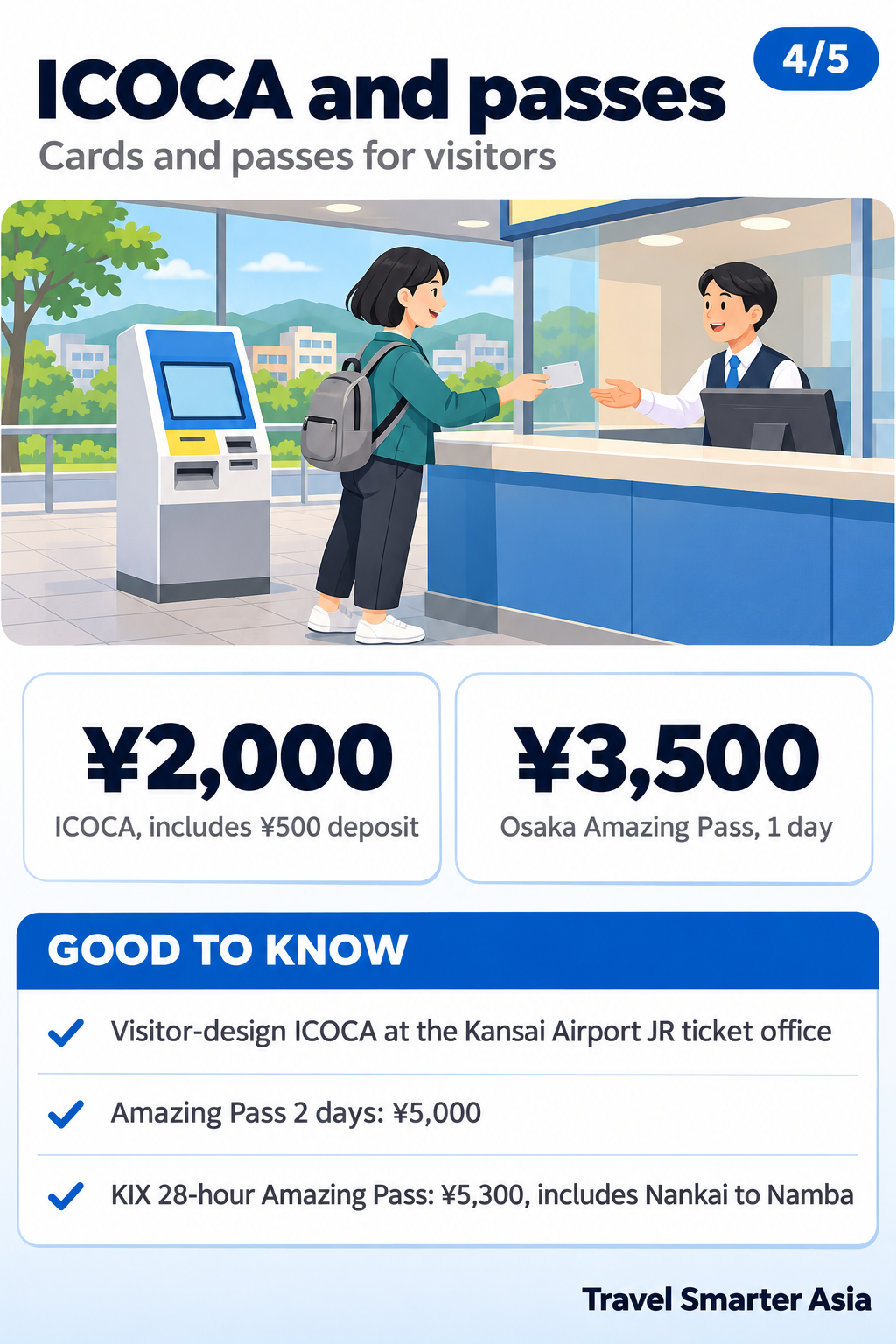
ICOCA is JR West’s IC card, usable “all across Japan on railways and buses, and at stores displaying the IC or ICOCA mark.” The standard card costs “2,000 yen (including 500 yen deposit)”. A special-design ICOCA for foreign visitors is sold at the JR ticket office at Kansai Airport station, one per person.
The Osaka Amazing Pass
The Osaka Amazing Pass costs ¥3,500 for one day and ¥5,000 for two days, adult, on sale until 31 March 2027. A KIX 28-hour version at ¥5,300 adds “a one-way Nankai Railway ticket from Kansai Airport Station to Namba Station.” Airport limousine buses are not covered.
Emergency numbers
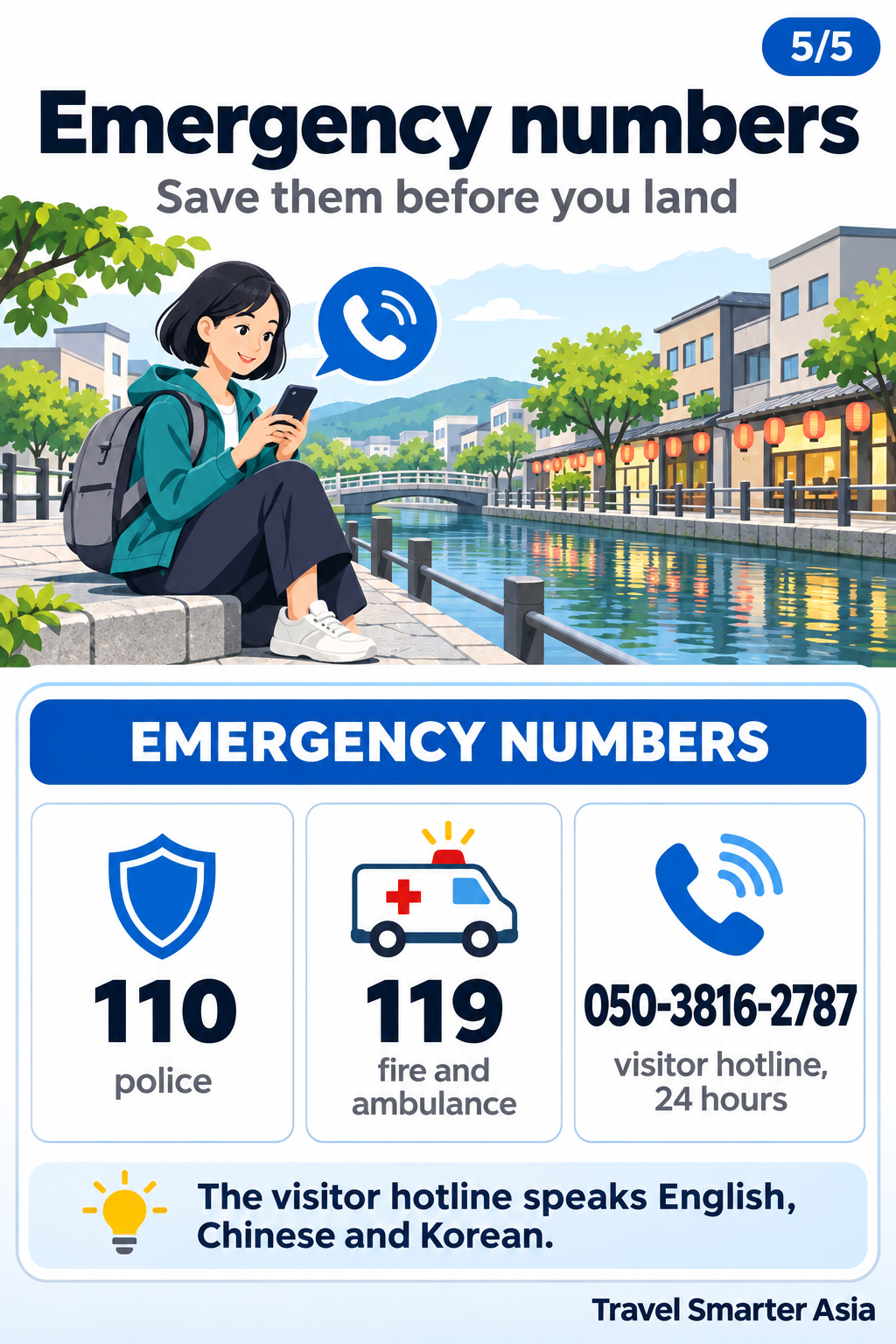
The Japan National Tourism Organization lists 110 for police and 119 for fire and ambulance. Its Japan Visitor Hotline, 050-3816-2787, runs “24 hours a day, 365 days a year” in English, Chinese and Korean.
Saily, a data eSIM you install before you fly and top up per country Our full write-up. (affiliate link)