Arriving in Fukuoka: the Free Terminal Shuttle, the Subway and the 640 Yen Day Pass
How to get from Fukuoka airport into the city: the free shuttle from the international terminal, the subway station inside the domestic terminal, the Nishitetsu bus to Hakata, the 640 yen one-day pass and Hayakaken.
Some links here are affiliate links. If you buy through one we may earn a commission, at no extra cost to you. It never changes what we recommend, and the pages that carry no links say so on our about page.
✓ Checked and fact-checked
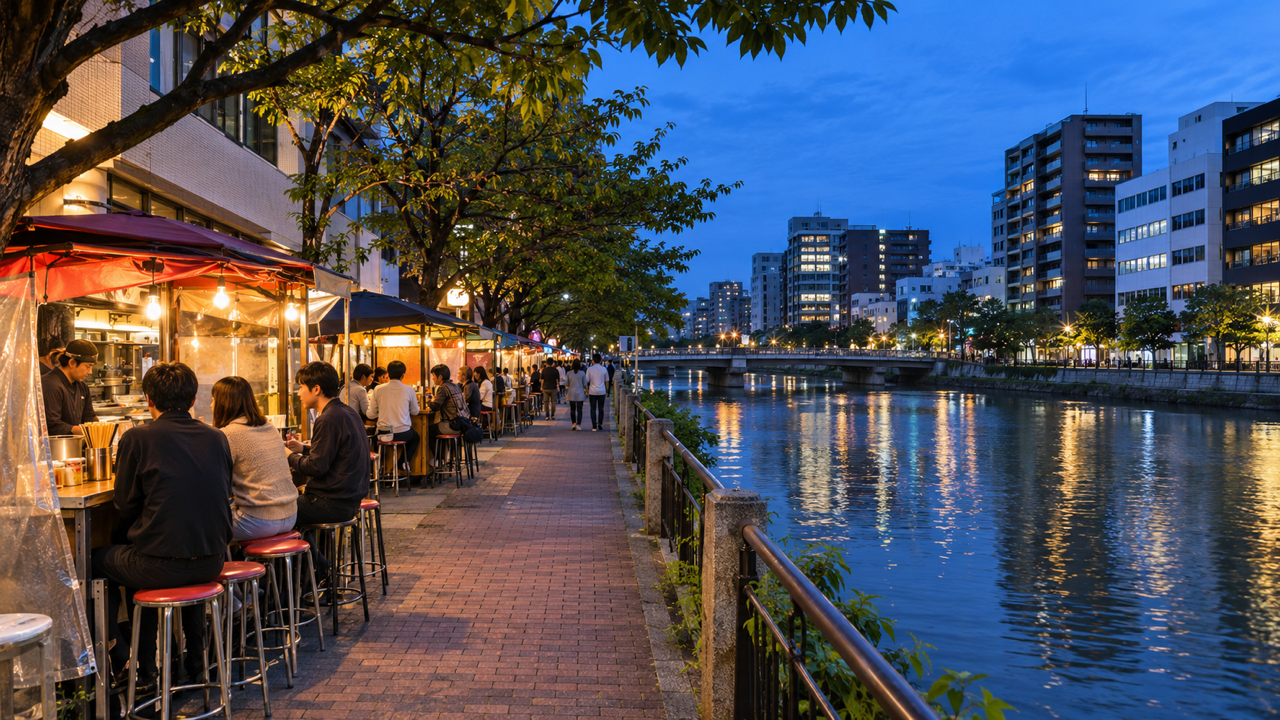
International flights to Fukuoka use the international terminal, and the subway station is under the domestic terminal, so most arrivals start with a short shuttle ride. Before you fly, get the single arrival code for immigration and customs, and read Japan’s tax-free rules if you plan to shop.
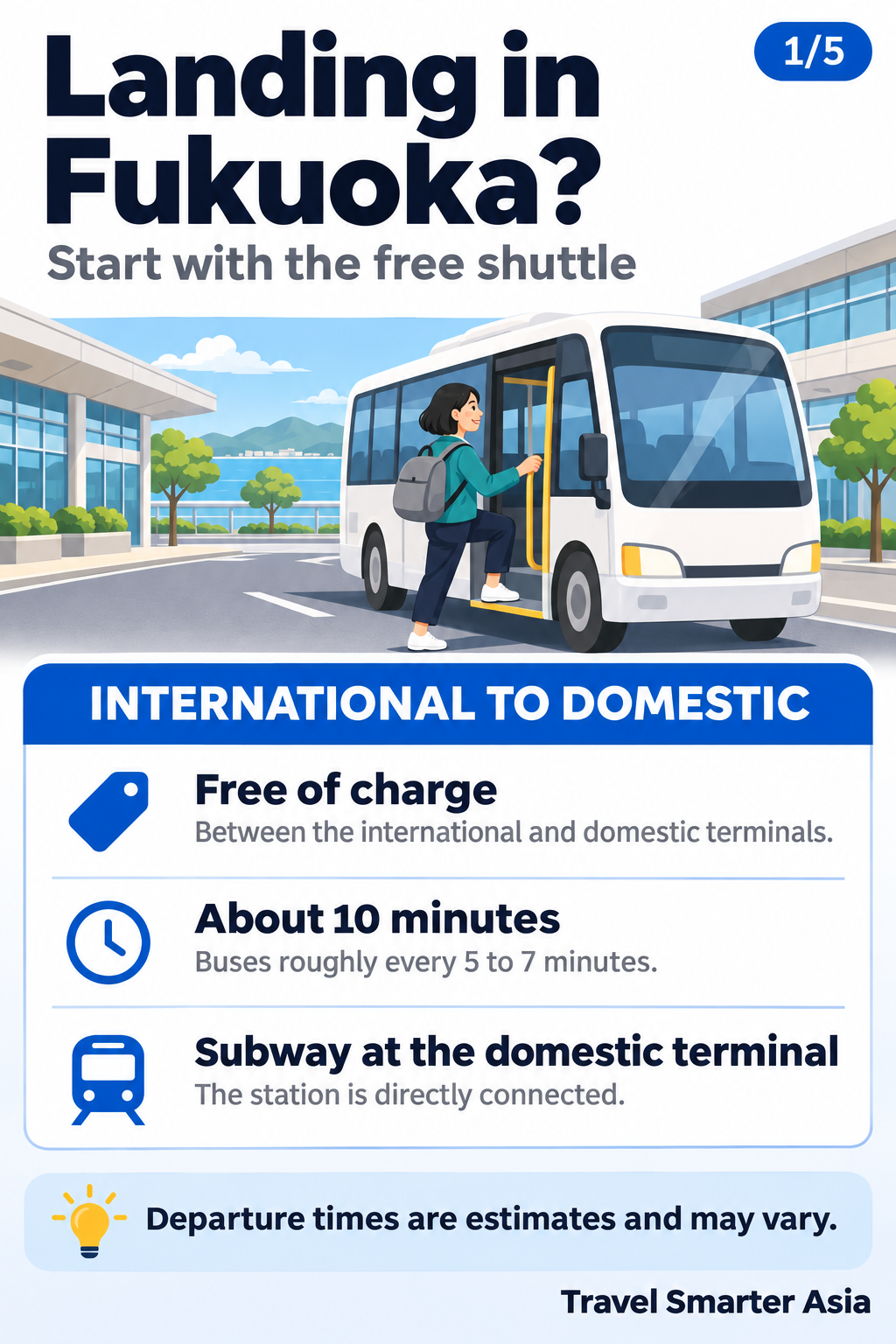
The free shuttle between terminals
The airport says of the shuttle between the international and domestic terminals: “This bus is free of charge.” It leaves from the International Terminal Shuttle Bus Stop and arrives at the domestic terminal’s South Shuttle Bus Stop. The airport puts the ride at about 10 minutes, with buses roughly every 5 to 7 minutes, and adds that “Departure times are estimates and may vary.”
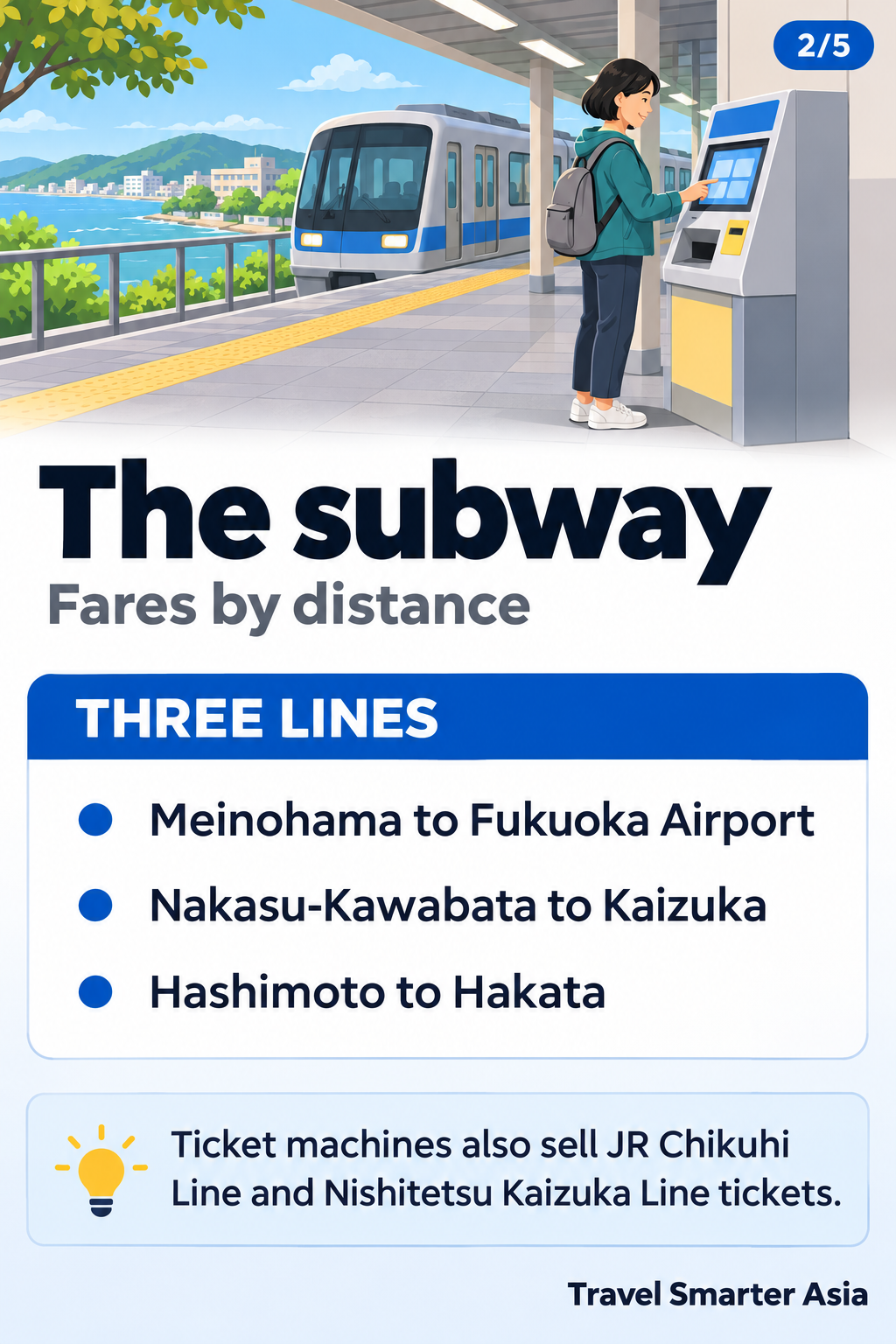
The subway
The airport says its subway station is directly connected to the domestic terminal. Fukuoka City Subway’s lines run from Meinohama to Fukuoka Airport, from Nakasu-Kawabata to Kaizuka, and from Hashimoto to Hakata, and fares depend on distance. Tickets for the subway, the JR Chikuhi Line and the Nishitetsu Kaizuka Line can be bought at any subway ticket machine.
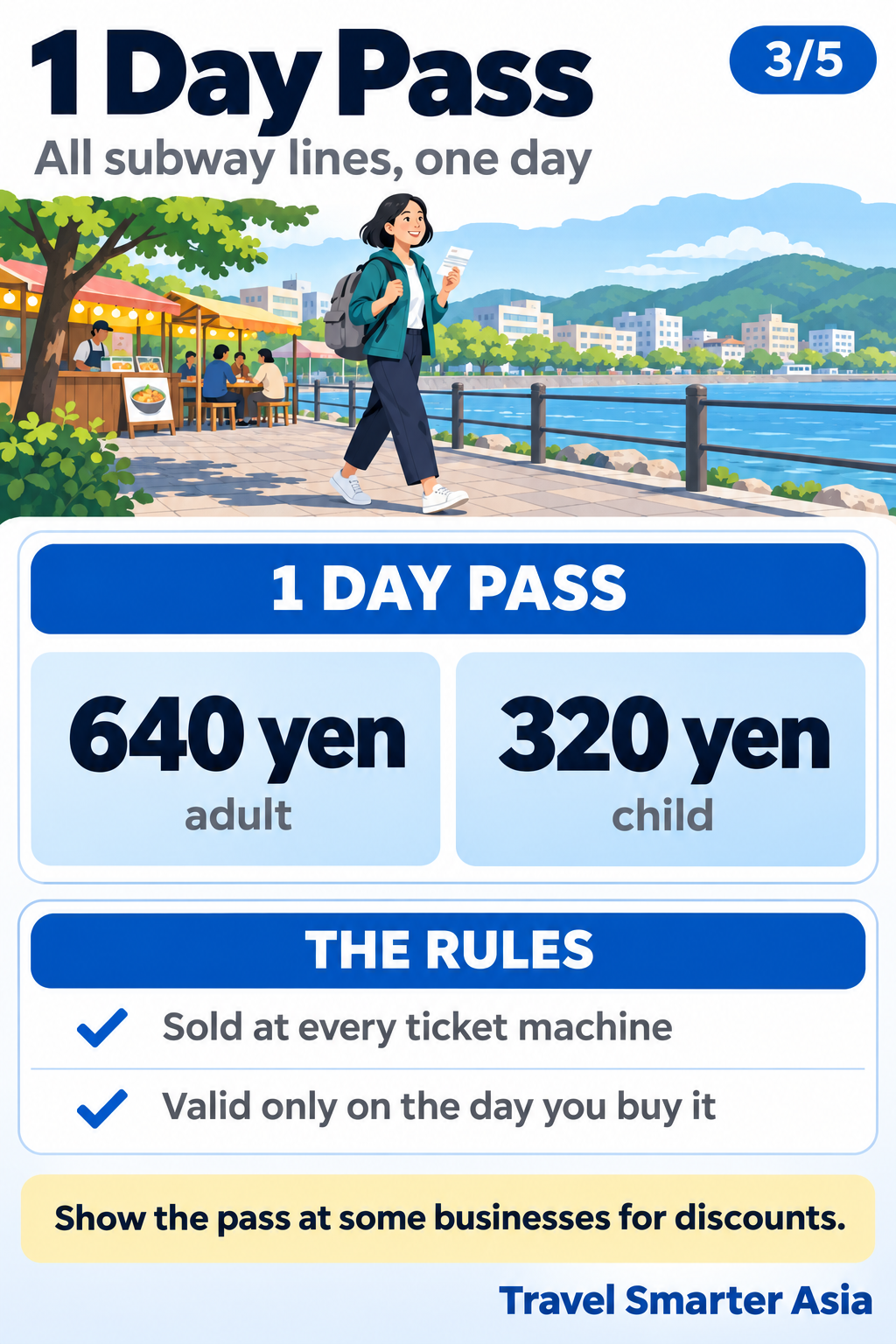
The one-day pass
Fukuoka City Subway’s 1 Day Pass gives “unlimited travel on all Fukuoka City Subway lines for one day”:
- Adult: 640 yen.
- Child: 320 yen.
It is sold at every ticket machine, and a pass bought at a machine can be used only on the day of purchase. Showing it at some businesses earns discounts.
Hayakaken
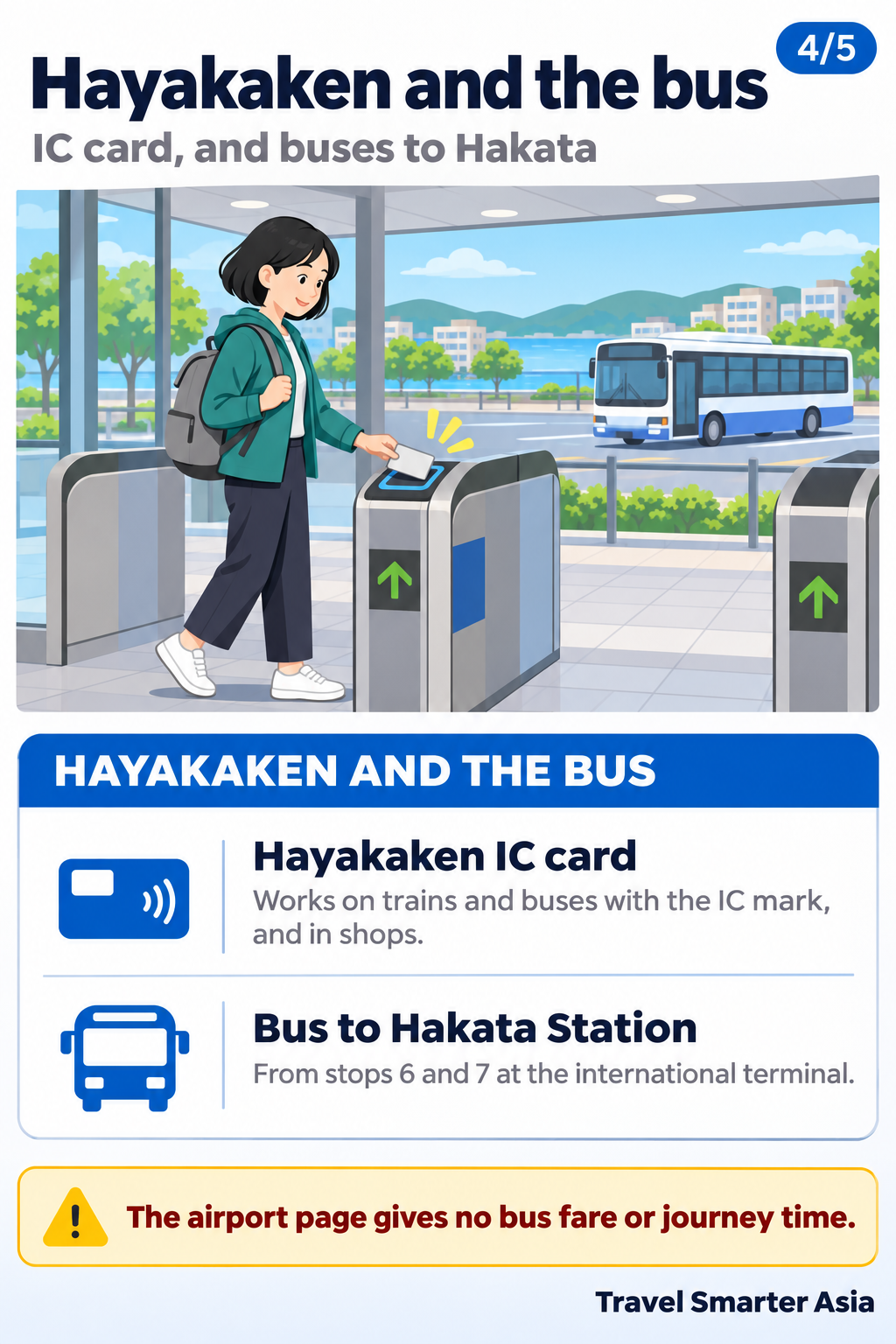
Hayakaken is the subway’s IC card. The subway says it works “for trains and buses in Japan that have the IC mark”, and as electronic money in shops showing the IC mark.
Fukuoka Airport’s own page sends you to a route planner for detailed directions, which means data on landing. With Saily installed before you fly, your phone works at the international terminal. Fukuoka is a common first stop before Korea or the rest of Japan; add the next country to your Saily profile when you go.
The Nishitetsu bus to Hakata
From the international terminal, the airport says buses to Hakata Station, run by Nishi-Nippon Railroad, leave from stops 6 and 7. Its page gives no fare or journey time.
Going on through Kyushu? The airport buses and streetcars in Kumamoto, Beppu, Nagasaki and Kagoshima have their own guides, and the JR Kyushu passes are in our pass guide.
Emergency numbers
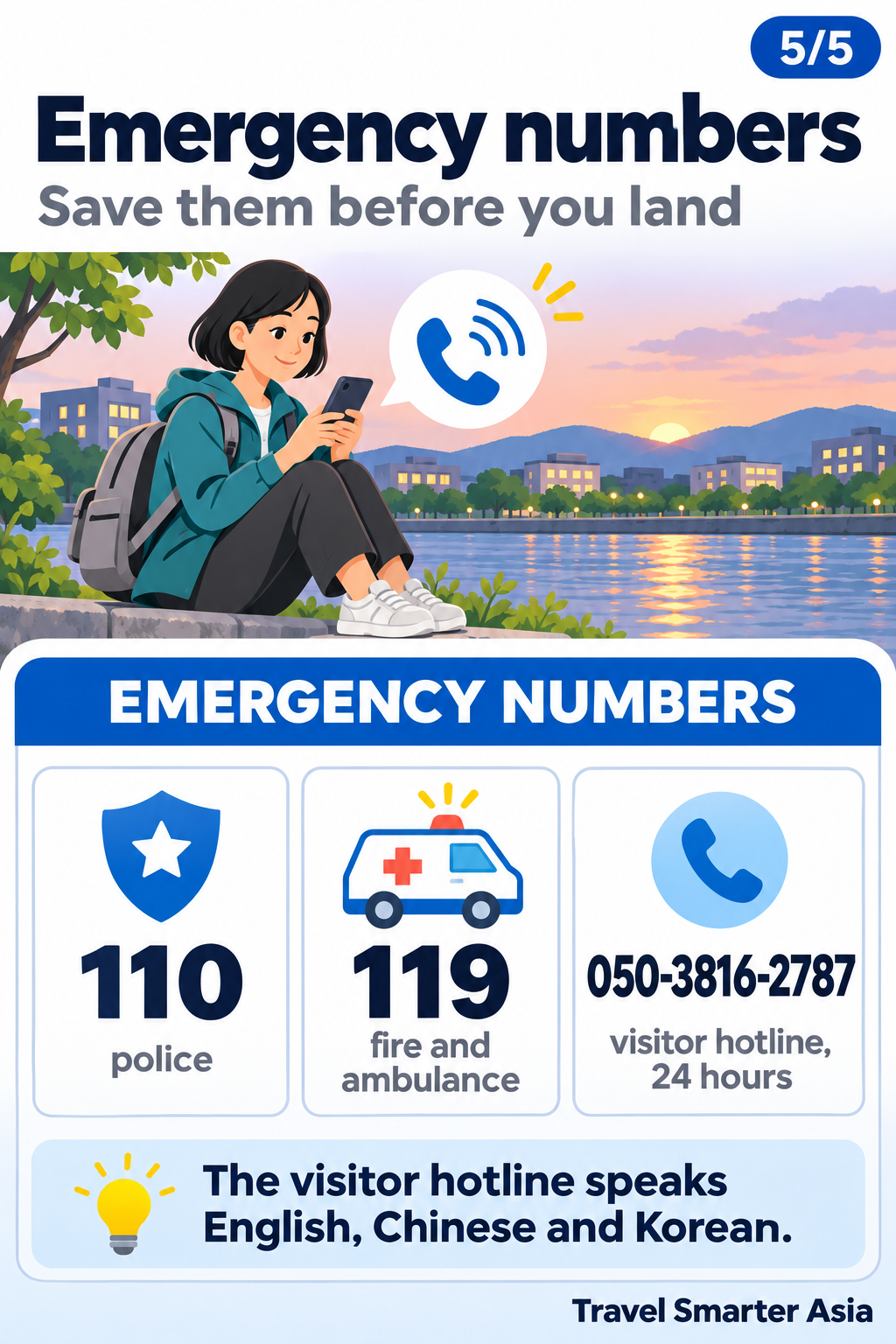
The Japan National Tourism Organization lists 110 for police and 119 for fire and ambulance. Its Japan Visitor Hotline, 050-3816-2787, runs 24 hours a day in English, Chinese and Korean.
Saily, a data eSIM you install before you fly and top up per country Our full write-up. (affiliate link)