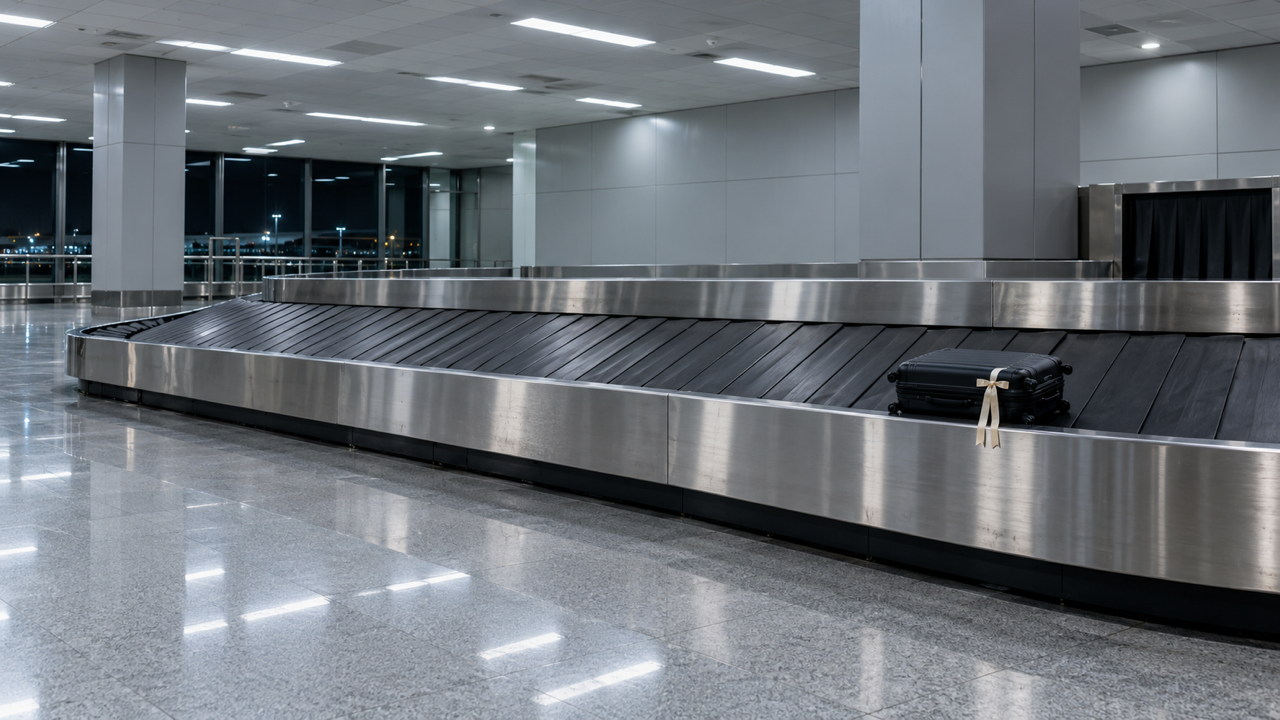
On an international trip between two countries that have joined the 1999 Montreal Convention, a missing or broken suitcase falls under that treaty, and an airline’s conditions of carriage cannot give you less than it does. The treaty also sets short deadlines, and a claim that misses one is gone however good it was. Every clause and figure below comes from the Convention’s text or from ICAO, the UN aviation agency that holds the treaty.
Does the Convention cover your trip?
It applies when the places of departure and destination on your ticket are both in States Parties. A round trip that starts and ends in the same State Party counts too, if the ticket has an agreed stop in another country.
ICAO’s list of parties counts 145. Most of the region is on it: China, Japan, the Republic of Korea, Singapore, Malaysia, Thailand, Viet Nam, the Philippines, Indonesia, India, Cambodia, Brunei, Mongolia, Nepal, Sri Lanka, the Maldives, Bangladesh, Pakistan and Australia. The treaty entered into force for Thailand on 2 October 2017 and for Cambodia on 1 April 2025, so older advice about either country may predate it.
Hong Kong sits in a footnote. China’s ratification excluded it at first. In a letter to ICAO dated 20 October 2006, China said the Convention would apply in the Hong Kong SAR from 15 December 2006. Macao was covered from the start.
We could not find Laos or Myanmar on ICAO’s list. A journey that begins or ends in a non-party falls under other rules, which this page does not cover.
A domestic flight on its own ticket, Bangkok to Chiang Mai for example, is not international carriage under the treaty. The same flight booked as the last leg of a ticket from Hong Kong is. The Convention treats a journey by successive carriers as one undivided carriage when it was agreed as a single operation, and a leg inside one country keeps its international character.
Seven days and twenty-one days
Article 31 is the clause to read before you leave the airport.
A damaged bag must be complained about “forthwith after the discovery of the damage”, and at the latest within seven days of the date you received it.
A delayed bag must be complained about within twenty-one days of the date it was placed at your disposal, which is the day it was finally delivered or made available to you.
Both complaints must be in writing, given or sent within those times. If none is made in time, the text says no action lies against the carrier except in a case of fraud on its part.
Walking away from the belt with a bag also counts against you. Under the same article, receiving checked baggage without complaint is prima facie evidence that it arrived in good condition. If the shell is cracked or a wheel has gone, say so at the desk before you leave the hall, then put it in writing.
When a delayed bag counts as lost
If the airline admits the bag is lost, or it has not arrived twenty-one days after the date it ought to have arrived, you are entitled to enforce your rights as for a lost bag.
The two twenty-ones start from different days. The lost-bag clock runs from the day the bag should have arrived. The delay-complaint clock runs from the day it does arrive. A bag that turns up on day nineteen is a delay, and you then have twenty-one days from that delivery to complain in writing.
What the airline is liable for
Checked baggage. The airline is liable for destruction, loss or damage if the event happened on board or while the bag was in its charge, even if it was not careless. The one exception in the text is damage that results from a defect in the bag itself.
Cabin bags and personal items. The airline is liable only if the damage resulted from its fault, or the fault of its staff or agents.
Delay. The airline is liable for the damage the delay causes unless it proves that it took all measures that could reasonably be required to avoid the damage, or that it was impossible to take them. The Convention does not list what a passenger waiting for a bag may buy and recover. It speaks only of damage, so the receipts for what you bought are what the claim is built on.
The ceiling, per passenger
Liability for baggage is capped per passenger, for destruction, loss, damage and delay together. The figure is in Special Drawing Rights, a unit defined by the IMF, and the treaty reviews it every five years. The original limit was 1,000 SDRs. ICAO’s 2024 review set it at 1,519 SDRs from 28 December 2024, up from 1,288. When ICAO announced the change in October 2024 it put the new figure at about US$2,000.
The cap covers all of a passenger’s bags combined, so a laptop and a camera in the hold can use most of it before anything else is counted. The Convention offers one way to raise it. When you hand over the bag, make a special declaration of interest and pay any supplementary sum the airline asks. The cap then becomes the declared sum, unless the airline proves your actual interest was lower. That is a conversation at the check-in counter, and it is too late once the bag has gone down the belt.
A policy is the other route, with a different kind of limit. SafetyWing prints lost checked luggage at US$500 per item, up to US$3,000 per plan, on its Essential plan, which we read in full in our test of SafetyWing’s coverage table. A per-item figure and a per-passenger one answer different questions, so check which you have before the expensive thing goes in the hold. The same page lists delayed luggage only under SafetyWing’s Complete plan. The Essential plan’s line covers luggage that is lost.
A carrier can accept higher limits or none at all. It cannot go lower: any contract term that relieves the carrier of liability or sets a lower limit than the treaty’s is void, and the rest of the contract stays subject to the Convention.
Which airline to claim against
On a journey with more than one airline, Article 36 gives you three possible defendants for a baggage claim: the first carrier, the last carrier, and the one carrying the bag when the loss, damage or delay happened. They are jointly and severally liable. The last carrier usually has a desk in the arrivals hall you are standing in, which is a practical reason to start there.
Two years
The right to damages is extinguished if a legal action is not brought within two years of arrival at the destination, or of the date the aircraft ought to have arrived. The written complaint under Article 31 and the legal action under Article 35 have separate clocks. Meeting the first does not stop the second from running.
At the belt
This part is our own practice, built around the clauses above and not stated in them.
- Keep the tag stub. Article 3 obliges the airline to give you a baggage identification tag for each checked bag. It is the only document that ties you to that bag.
- Report it before you leave the hall, and leave with a file reference.
- Send your own written complaint to the airline by email or its web form, dated, quoting the file reference, inside the deadline. Keep a copy.
- Photograph damage where it happened, with the bag tag in the frame.
- Keep every receipt for what you buy while you wait.
What the treaty does not say
- It names no claim form, so the text does not settle whether the report a baggage desk fills in counts as your written complaint. Sending your own costs nothing and removes the question.
- It sets no figure for overnight essentials and no deadline for the airline to pay.
- It fixes no exchange rate. In court, SDRs are converted into local currency at their value on the date of the judgement.
- It says nothing about the national passenger-rights rules some countries add on top. For what you are owed when the flight itself is late or cancelled, see what an airline owes you when a flight goes wrong in Asia.
Luggage cover priced per item, read before you check the bag in (affiliate link)