Arriving in Tokyo: Narita Express, Skyliner, and Tapping a Bank Card on the Subway
How to get from Narita or Haneda into Tokyo, where you can tap a contactless bank card and where you cannot, Welcome Suica for visitors, and the Tokyo Subway Ticket.
Some links here are affiliate links. If you buy through one we may earn a commission, at no extra cost to you. It never changes what we recommend, and the pages that carry no links say so on our about page.
✓ Checked and fact-checked
Tokyo has two international airports, Narita and Haneda, and the routes into the city are different for each. Register for Visit Japan Web before you fly, and if you plan to shop, read the tax-free rules that changed on 1 November 2026.
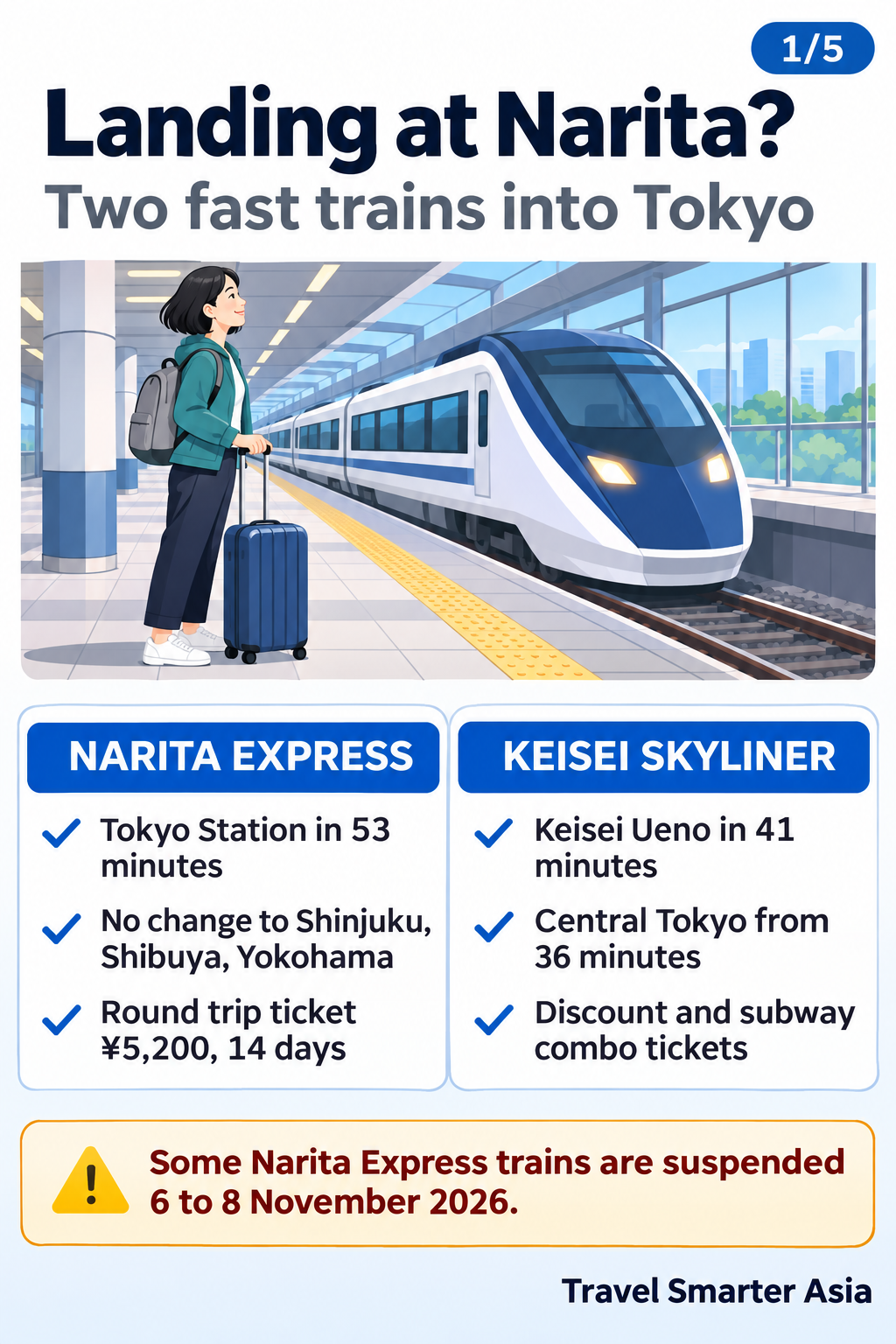
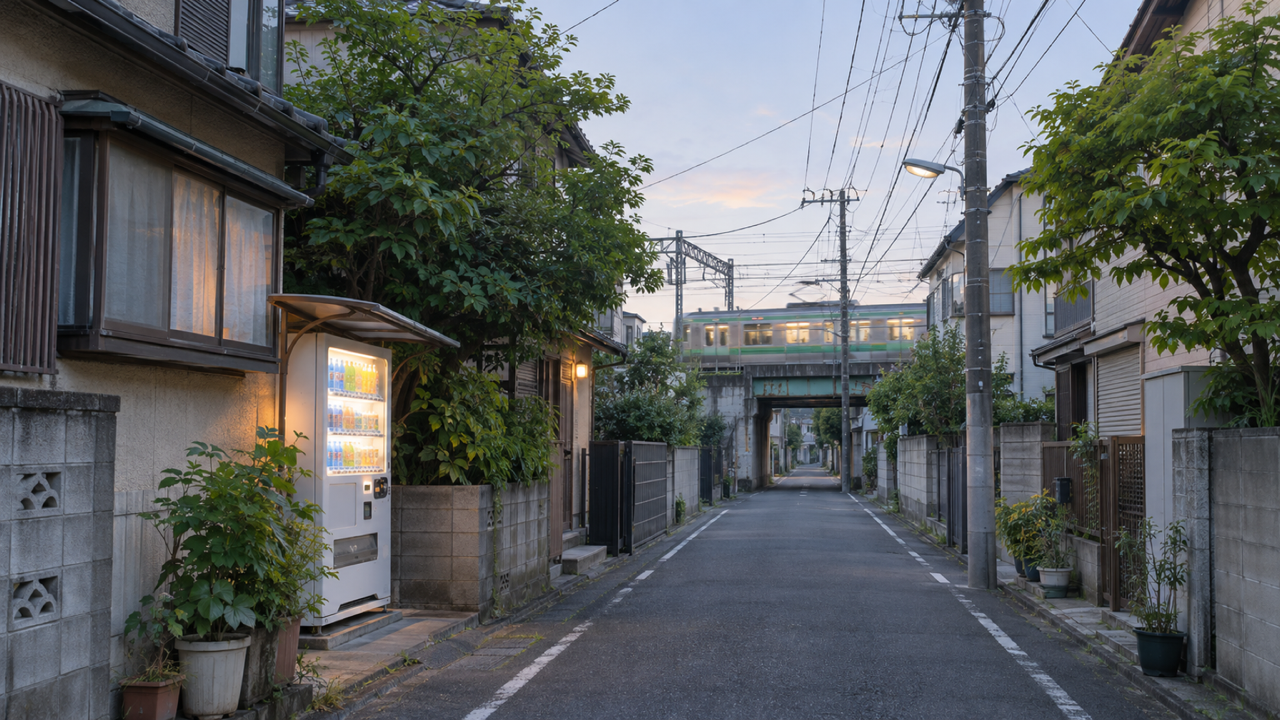
From Narita: Narita Express
JR East says “The fastest train from Narita Airport Station to Tōkyō Station takes just 53 minutes”, with no change of train to Tokyo, Shinagawa, Shibuya, Shinjuku or Yokohama. JR East’s page carries a notice that “From November 6th (Fri) to November 8th (Sun), 2026, some Narita Express services will be suspended.”
For visitors, JR East sells the N’EX TOKYO Round Trip Ticket at ¥5,200, for “Round-trip usage within the 14-day validity period”. JR East’s single fare was not on the page we read.
From Narita: Keisei Skyliner
Keisei says the Skyliner reaches Keisei Ueno “in as little as 41 minutes”, and central Tokyo “in as little as 36 minutes”. It sells a discounted Skyliner ticket and a package of the Skyliner with the Tokyo Subway Ticket. Keisei’s single fare was not on the pages we could read.
From Haneda
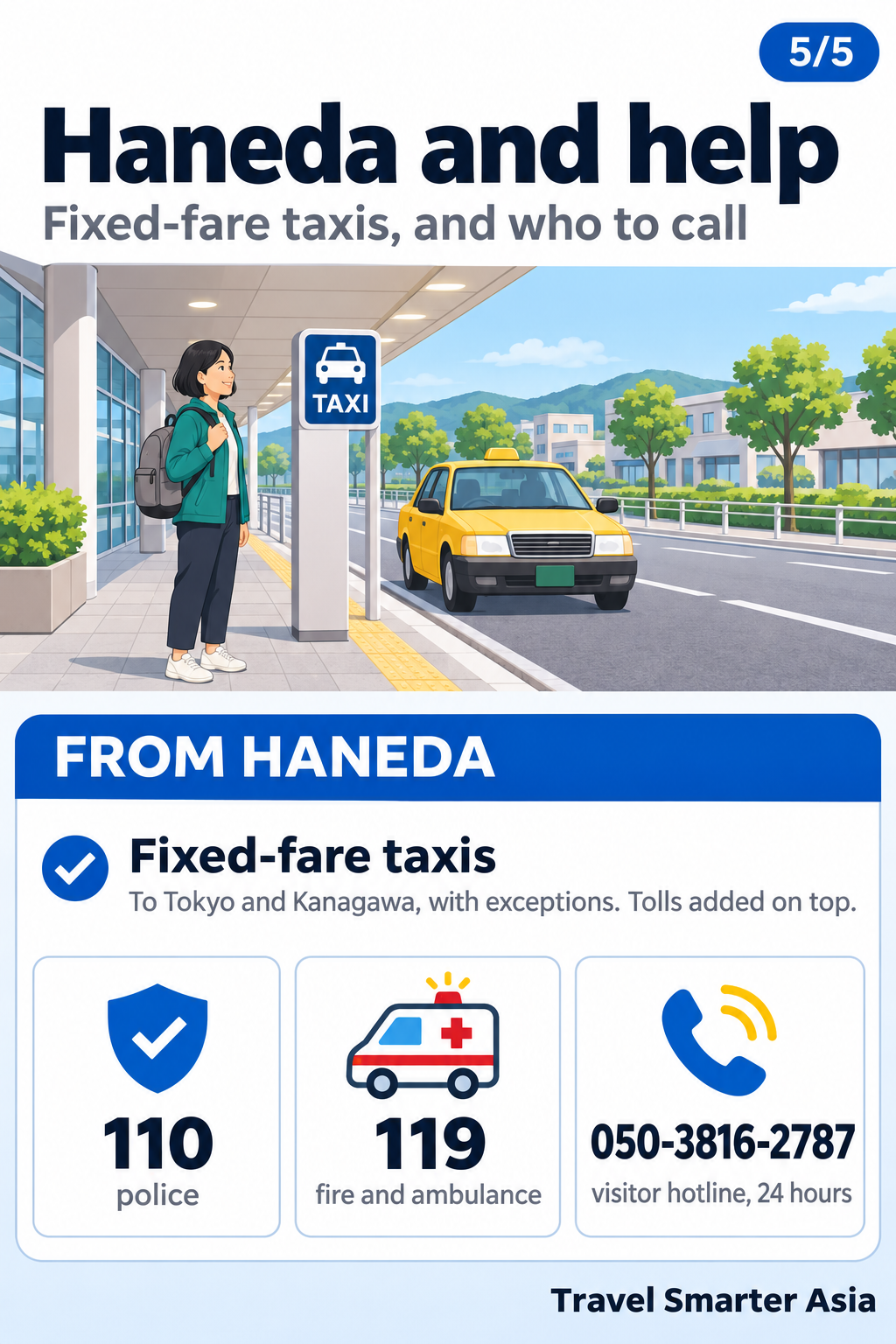
Haneda Airport says you can take a taxi between the airport, Tokyo proper and Kanagawa Prefecture “for a fixed fare”, with exceptions for some areas, and toll fees added on top. The zone fares are not on that page. Haneda’s train operators, Keikyu and the Tokyo Monorail, did not load for us on 4 November 2026, so we publish no fares for them.
Tapping a bank card: where it works
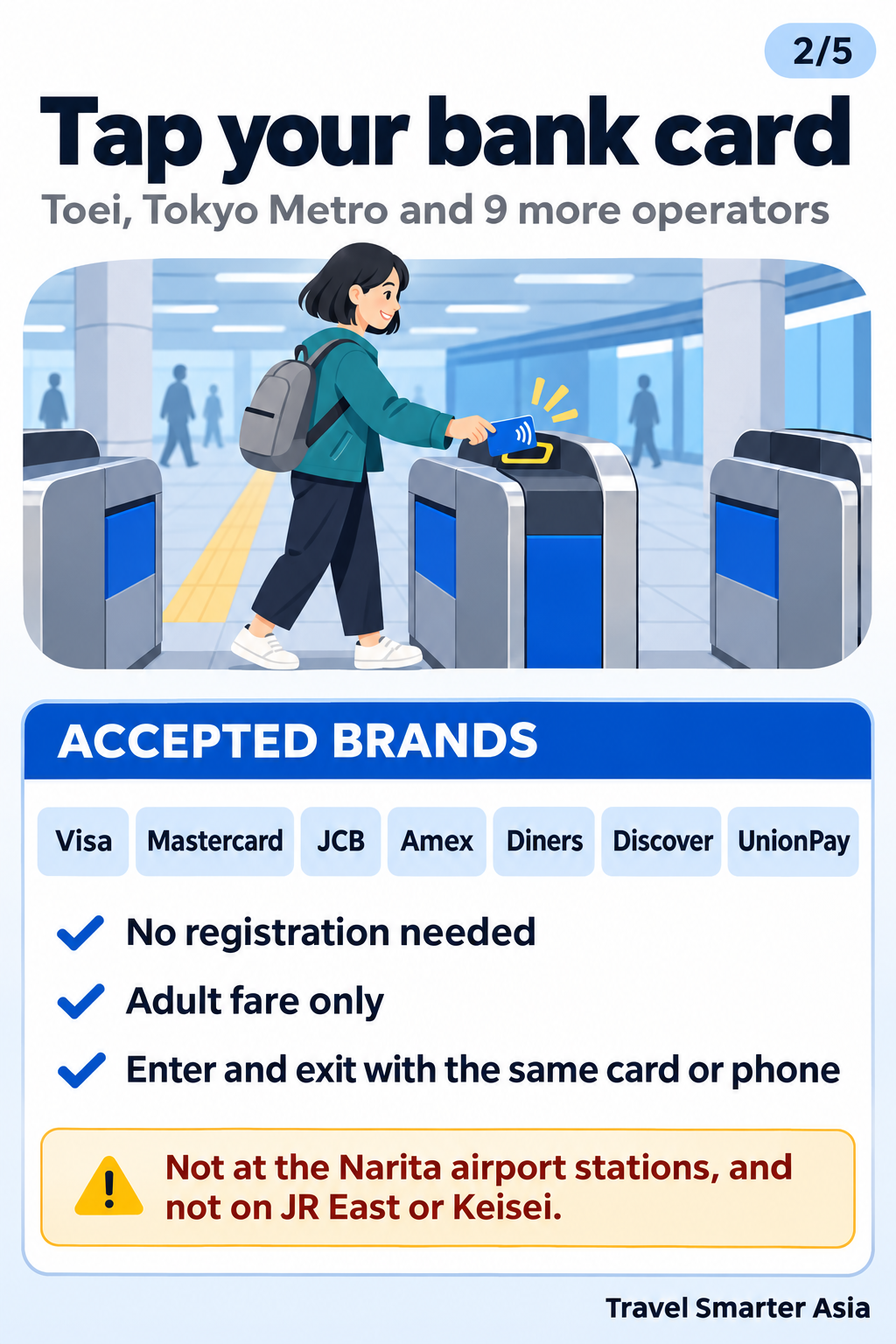
Toei Subway runs “a postpaid tap-to-ride service using credit cards and other contactless payment cards”, shared by 11 railway operators in the Kanto region, Tokyo Metro, Keikyu and Toei among them. Toei lists the accepted brands as “Visa, Mastercard, JCB, American Express, Diners Club, Discover, and UnionPay”. No registration is needed.
Three limits matter on arrival day:
- “Tap-to-ride is not available at Narita Airport Station or Airport Terminal 2 Station.”
- JR East, Keisei and Hokuso Railway do not accept it.
- Only adult fares apply, it cannot be combined with one-day passes, and you must enter and exit with the same card or phone.
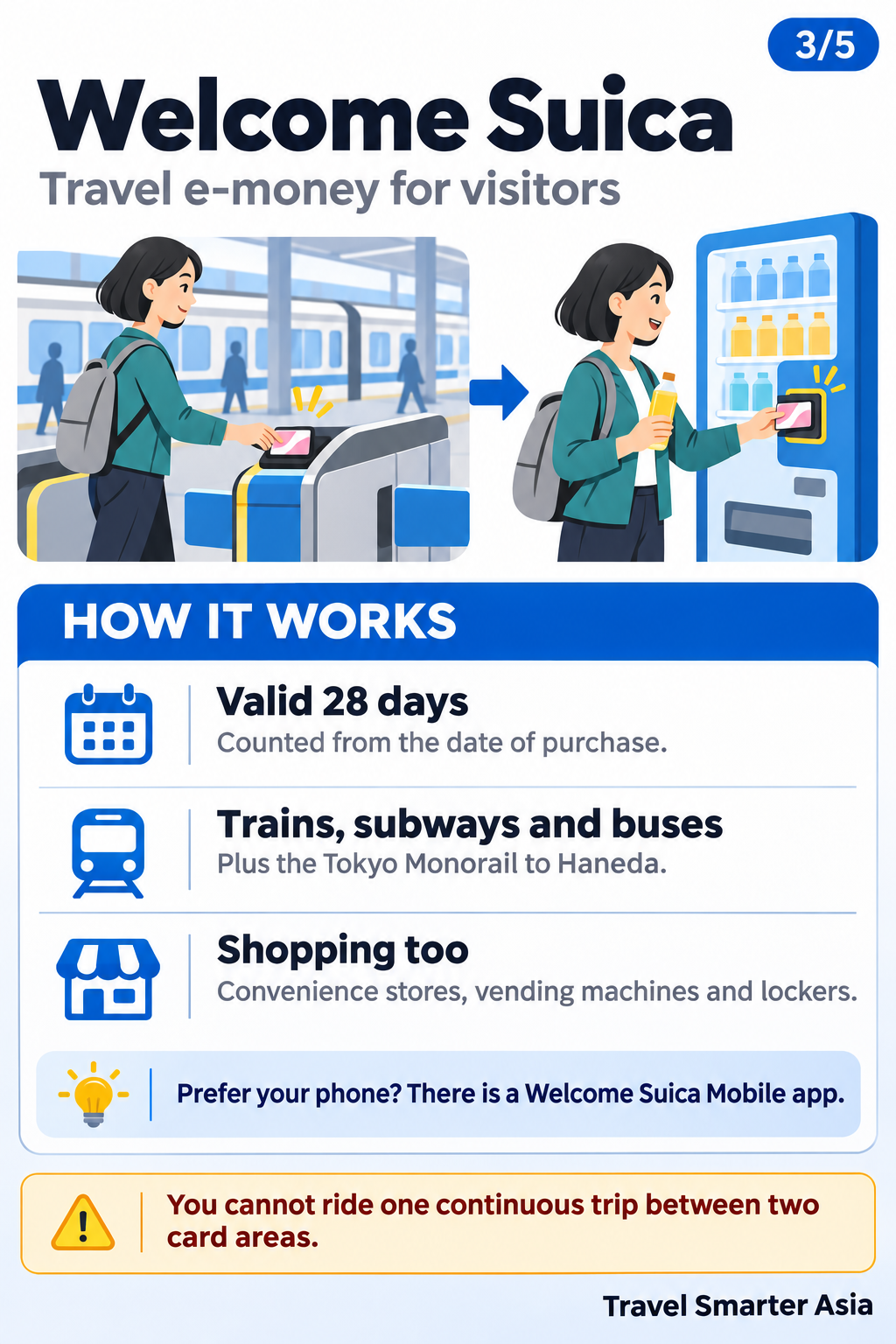
Welcome Suica
JR East calls Welcome Suica “e-money that can be used for travel and shopping and is recommended for temporary visitors”, valid “for 28 days beginning with the date of purchase.” It works on trains, subways and buses in the Tokyo area, the Tokyo Monorail to Haneda, and in other IC card areas across Japan. You cannot use it for one continuous trip between two areas. JR East also offers Welcome Suica Mobile, an app version. Its page gives no card price.
The Tokyo Subway Ticket
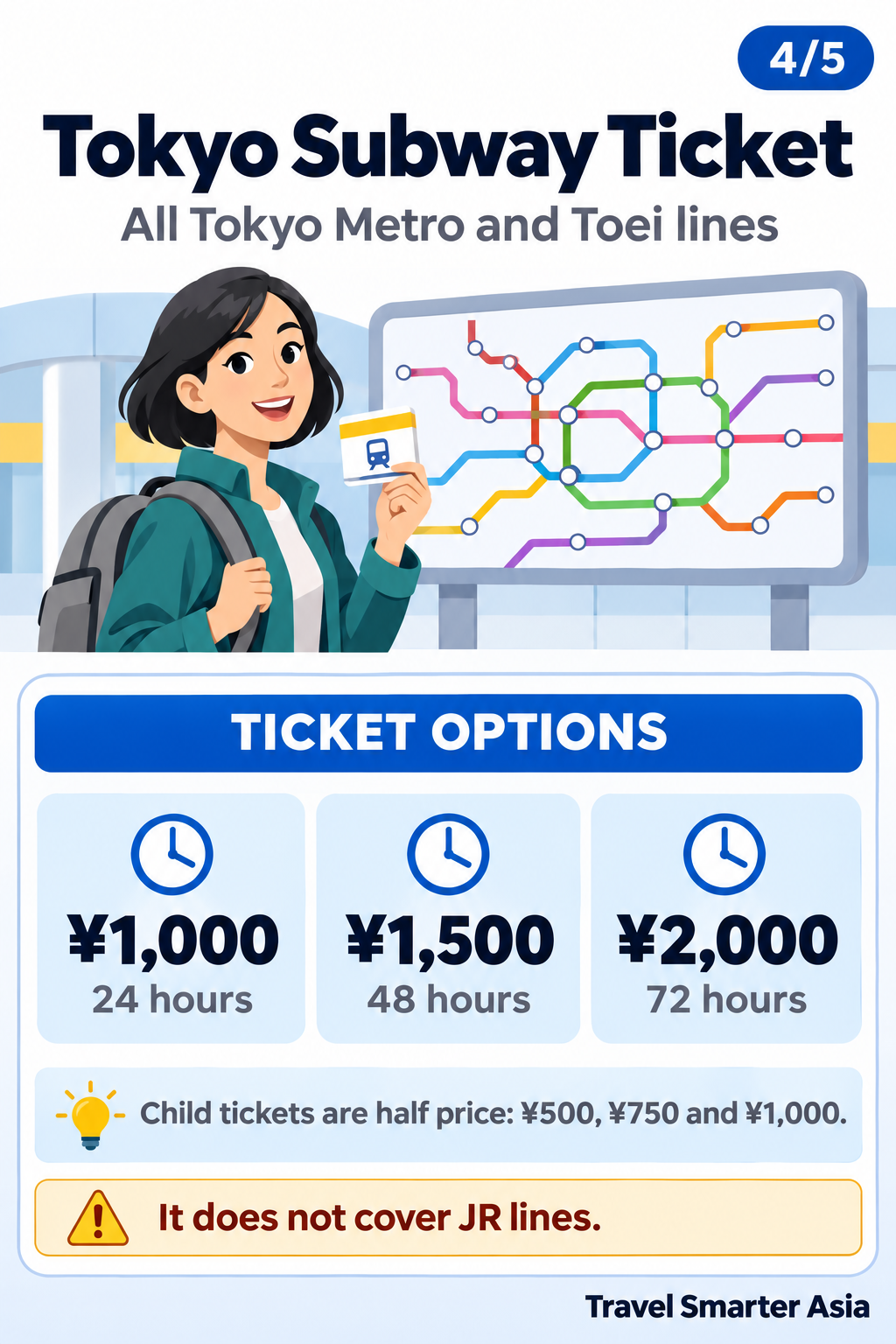
Tokyo Metro sells this to overseas visitors, and to Japanese visitors from outside Tokyo and seven nearby prefectures. It is valid on all Tokyo Metro and Toei Subway lines from the time you start travelling:
- 24 hours: ¥1,000 adult, ¥500 child.
- 48 hours: ¥1,500 adult, ¥750 child.
- 72 hours: ¥2,000 adult, ¥1,000 child.
It does not cover JR lines. Tokyo Metro also sells it as a QR code ticket that can be sent to your phone.
The app routes, Welcome Suica Mobile and the QR subway ticket, need data from the arrival gate. A Japan plan on Saily, set up before departure, covers that without a SIM queue at Narita or Haneda. For a longer trip, Saily adds the next country to the same profile.
Emergency numbers
The Japan National Tourism Organization (JNTO) lists 110 for police and 119 for fire and ambulance. Its Japan Visitor Hotline, 050-3816-2787, runs “24 hours a day, 365 days a year.”
Saily, a data eSIM you install before you fly and top up per country Our full write-up. (affiliate link)